In the simplest terms, this surgery makes the stomach smaller and reduces the amount of food and calories the body can absorb.
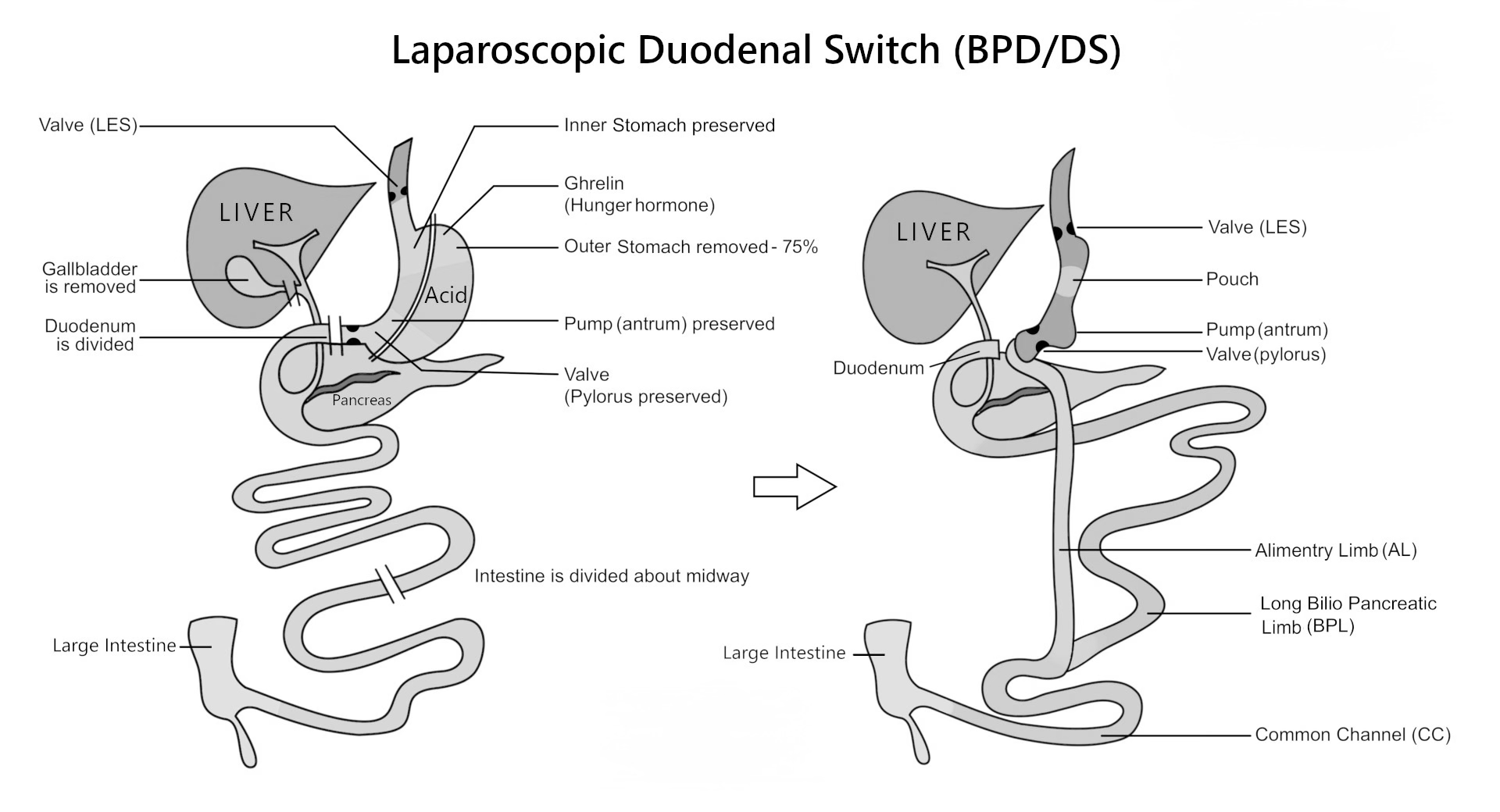
This before-and-after diagram above is a little technical but the procedure essentially does this:
- About 70-80% of the stomach is removed, leaving a smaller stomach (labeled “pouch” in the diagram)
- The duodenum, the passage between the stomach and small intestine,is divided just beyond the stomach.
- A cut is made about halfway down the small intestine, essentially dividing it into two parts. We’ll call the top part Intestine 1 and bottom part Intestine 2.
- The upper end of Intestine 2 is connected to the portion of the duodenum that is still attached to the pouch.
- Intestine 1 remains connected to the liver and pancreas, allowing bile and pancreatic enzymes to continue flowing through it.
- The bottom end of Intestine 1 is connected at the bottom of Intestine 2 near where it meets the large intestine.
The consequences of the surgery are:
- The stomach is much smaller and can hold far less food than it could before surgery.
- Food travels through a shorter digestive pathway (Intestine 2), so fewer calories and nutrients are absorbed.
- Digestive enzymes from the liver and pancreas still mix with the food, but this happens much later in the digestive process, shortly before the contents enter the large intestine.
All of this leads to rapid weight loss.
I had this surgery on July 14.