When I first met with my bariatric surgeon, I made a single note: “120bpm, 1–3 hours per week.” Later I wrote this under it:
1 hour = 15 x 4
2 = 15 x 8
2:30 = 15 x 10
3 = 15 x 12
This became one of my guiding principles, and I used walking to achieve it. I also used my Apple Watch with the Fitness app to measure performance and progress. For goal setting, I used an app called Streaks, which integrates with Apple Health to let you set goals like “2 hours a week with heart rate above zone 1” and “Walk 6000 steps a day”. There’s also one for closing all your Activity Rings.
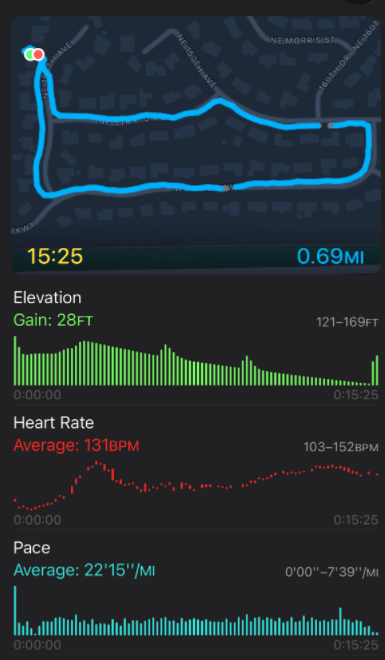
My first walk was just 0.69 miles around the “block” near our house on March 25. I rated the effort “Hard” and walked at a pace of 22:15/mile. My heart rate was below 120 bpm for just 3:28 of the 15:25 workout.
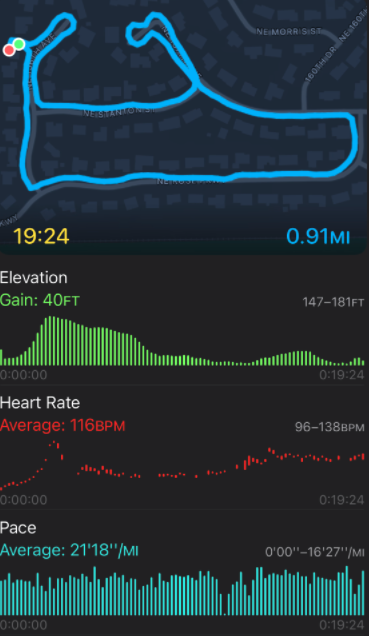
Within a few weeks, I took Tina’s advice and started including the cul-de-sacs in the walk. By now, my pace had improved to 21:18/mile and I was letting Apple choose my effort: Moderate. Despite the faster pace, I was above 120 bpm for only 6 minutes.
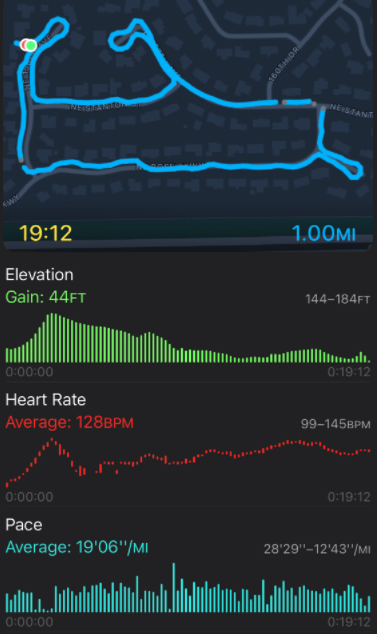
By May my route had evolved to exactly one mile and included both cul-de-sacs. There is a steep hill right at the beginning of the walk, which is clearly visible in both the elevation and heart rate graphs. At this point, I was purposefully driving up my heart rate by walking faster when I could see it drop on my watch. For this walk, I was above 120 bpm for 13 minutes and achieved a pace of 19:06/mile.
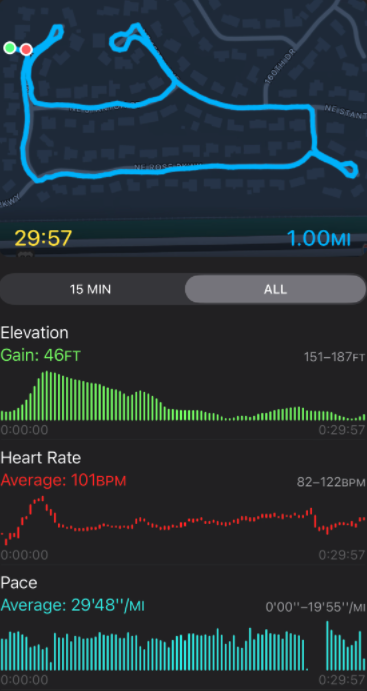
A week after surgery, I was back on my regular route although much slower, with a pace of 29:48. My heart rate was below 120 for nearly all of the walk. During this time I was not meeting my weekly goal of 2 hours above 120 bpm. It would take another week before I was able to walk at a pace of 21:00/mile, sometimes better. I would meet that goal again.
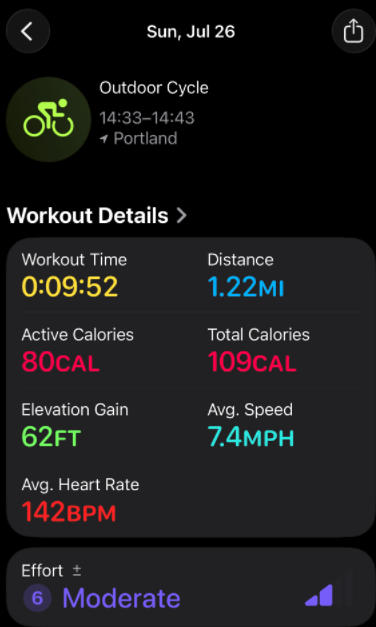
Near the end of July, I pulled my bike out of the garage, pumped up the tires and started riding laps around the block. My first ride and was only 2 laps. I continued to walk in the morning every day.
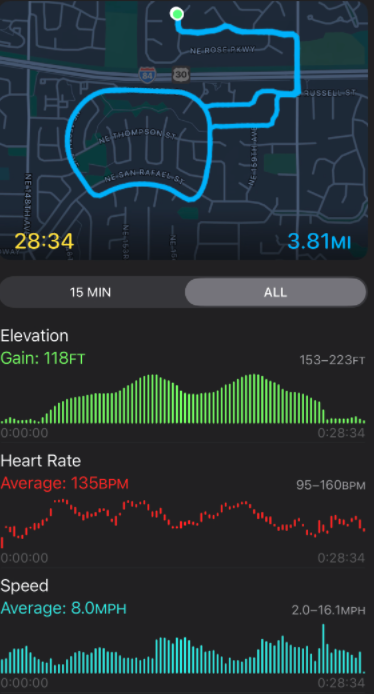
I was not content to ride circles around the block, so in August I returned to my old training “track” at Summerplace, a retirement community on the other side of the freeway. It’s a particularly good route for interval training because half is uphill and the other half is downhill. It looks like I went around twice here before going home. Cycling is great for pushing my heart rate, and for this ride I was above 120 bpm for all but 4:27 of the 28–minute ride.
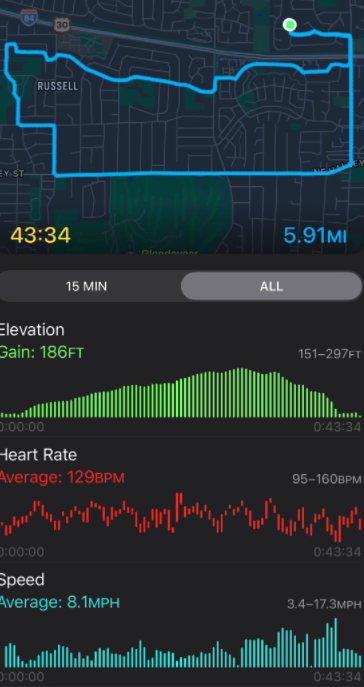
I was ready to leave the confines of Summerplace on August 19, when I rode to John Luby Park. This is the route that I used to ride on my work commute before COVID. There was more uphill than I had remembered which meant that I exceeded 120 bpm for 30 of the 43 minutes.
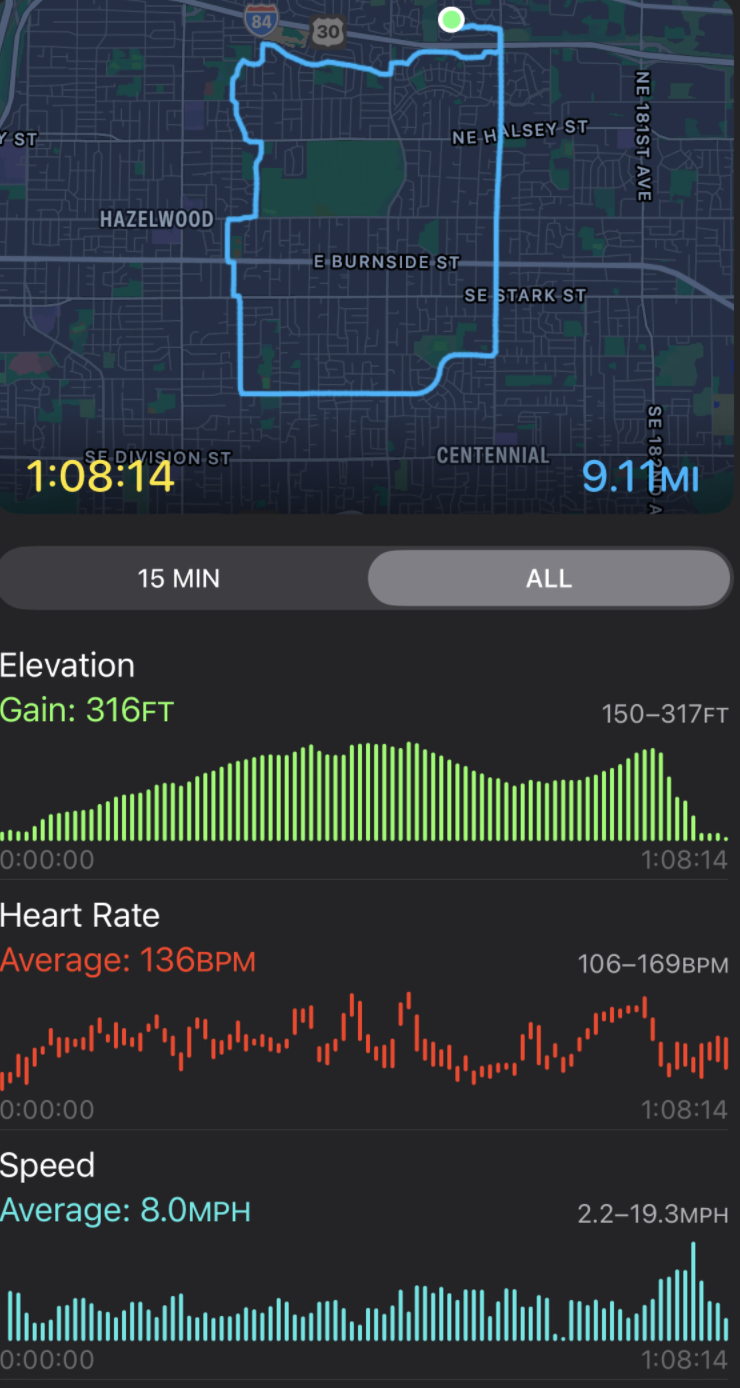
As August drew to a close, I rode for over an hour on a loop through “The 130s” and Mill Ave: 9.11 miles distance, “Hard” effort and an average heart rate of 136 bpm. Soon I hope to be taking 20– and 40–mile rides regularly.
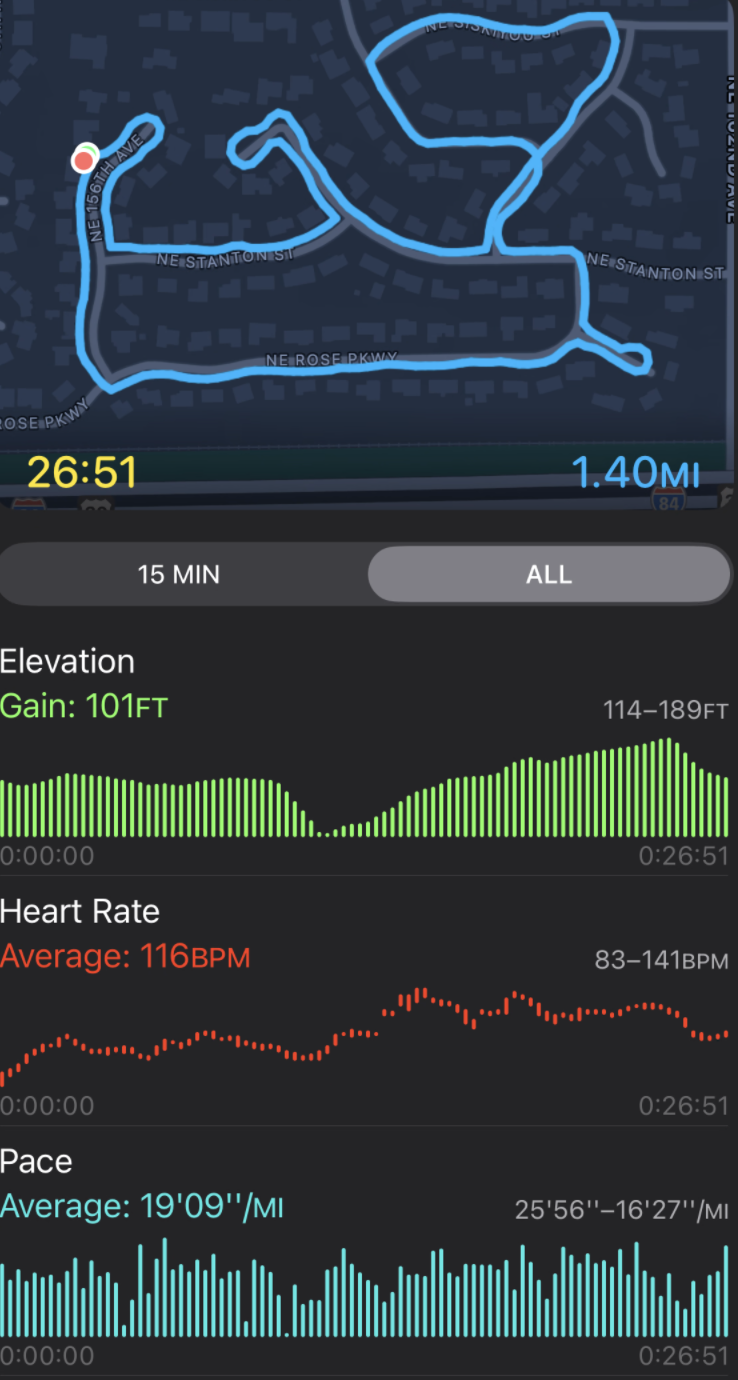
Tina inspired me to change up my walking route again, so now I’m walking 1.4 miles every morning. Two thirds of the route is uphill, so there’s a real opportunity to push my heart rate again.
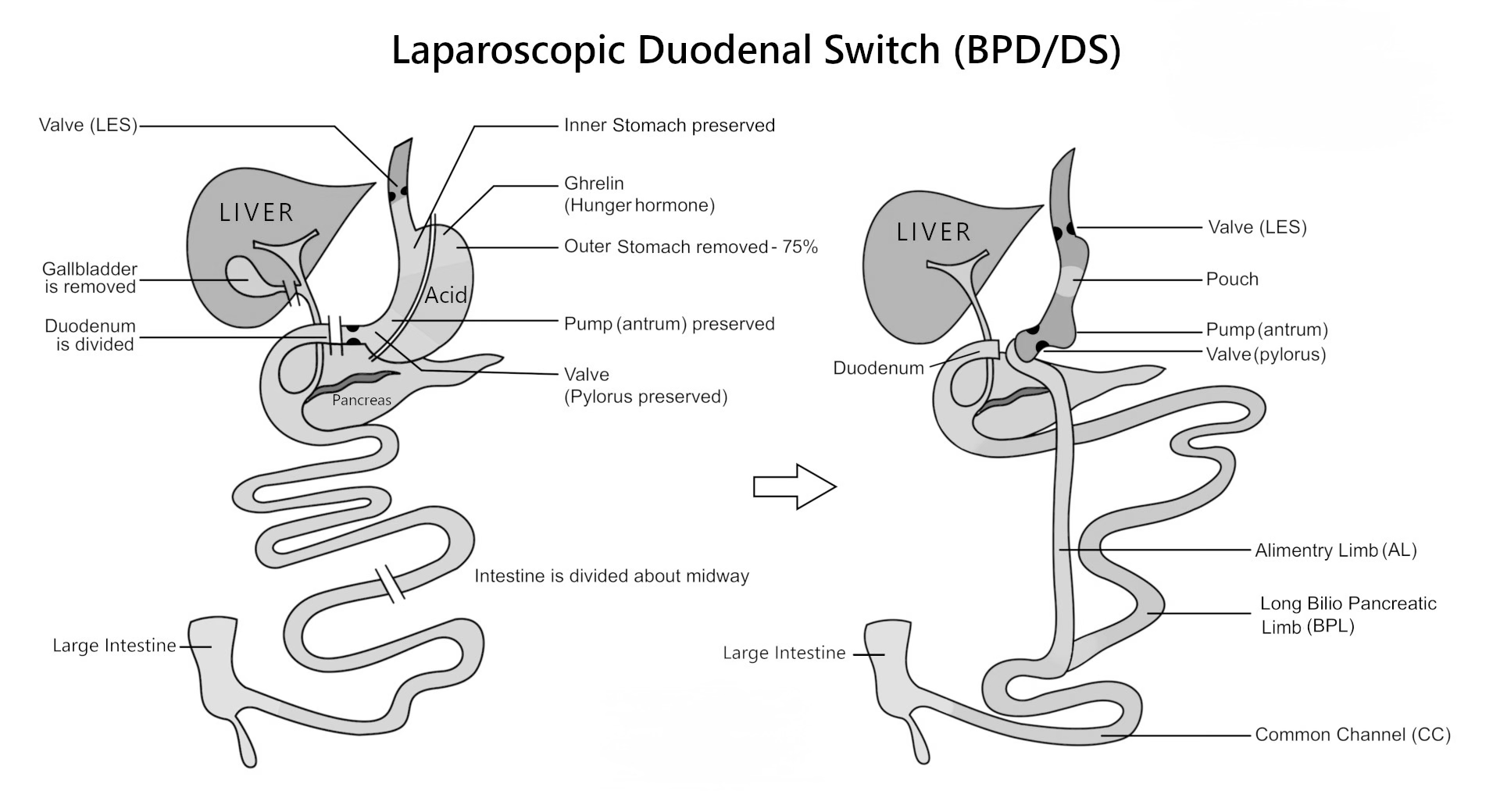
In the simplest terms, this surgery makes the stomach smaller and reduces the amount of food and calories the body can absorb.
This before-and-after diagram above is a little technical but the procedure essentially does this:
About 70-80% of the stomach is removed, leaving a smaller stomach (labeled “pouch” in the diagram)
The duodenum, the passage between the stomach and small intestine,is divided just beyond the stomach.
A cut is made about halfway down the small intestine, essentially dividing it into two parts. We’ll call the top part Intestine 1 and bottom part Intestine 2.
The upper end of Intestine 2 is connected to the portion of the duodenum that is still attached to the pouch.
Intestine 1 remains connected to the liver and pancreas, allowing bile and pancreatic enzymes to continue flowing through it.
The bottom end of Intestine 1 is connected at the bottom of Intestine 2 near where it meets the large intestine.
The consequences of the surgery are:
The stomach is much smaller and can hold far less food than it could before surgery.
Food travels through a shorter digestive pathway (Intestine 2), so fewer calories and nutrients are absorbed.
Digestive enzymes from the liver and pancreas still mix with the food, but this happens much later in the digestive process, shortly before the contents enter the large intestine.
Set aside money to pay the credit card each time you use it
Pay the statement balance by due date
What happens when you use a credit card
Pay for items (charge)
Cost of items are added to the current balance
The current balance can never exceed the credit limit
On the statement date, the current balance becomes the statement balance
The statement balance must be paid by the payment due date
Any portion of the unpaid statement balance is subject to interest after the due date
Best Practices
Pay statement balance when due every month, preferably on auto-pay
Know your statement and payment due dates
Using your credit card does not build credit. Paying without incurring fees builds credit.
Basic Glossary
Statement: a detailed summary of the charges, payments and credits to your account that have occurred since the last statement date
Statement date: the cut-off date for transactions that are included on the statement, usually comes a few days after payment due date
Statement balance: amount you owe the day of statement date
Minimum payment: amount that must be paid by the due date. Failure to pay this amount can result in late fees and negative marks on your credit file.
Payment due date: date that minimum payment is due (see late payment fee). Pay the full statement balance by this date to avoid interest charges.
Remaining statement balance: statement balance minus any payments that have been made since the statement date
Extended Glossary
Credit limit: Maximum amount of money that can be charged to your account at any given time.
Minimum payment: the amount that must be paid by statement date to avoid late fees and negative marks on your credit report. If interest is charged, the minimum payment will include those charges.
Late payment fee: a fee charged on the next statement if the minimum payment is not paid by the due date
APR: annual percentage rate used to determine how much interest is charged
Cash advance: a cash withdrawal from your account. There is usually a per-transaction fee, either a small percentage or a flat fee. Interest accumulation begins immediately until the cash advance amount is paid.
Balance transfer: a cash advance that goes directly to pay off a balance on your account with another creditor.
Annual fee: Yearly cost of having a premium credit card. Cards that have annual fees usually offer services, benefits, coupons, etc. that will offset the cost.
Auto-payment: payment is made automatically each month before the due date from your bank account. Payment options are usually:
minimum payment
statement balance
amount you specify
Grace period: the time between statement date and payment due date when no interest is charged for charges made during that time. The grace period often is only valid after the statement balance is paid on the due date.
Notes on Interest
You will never have to pay interest if you always pay your statement balance by the due date.
Monthly interest can be roughly calculated by multiplying the current balance by your APR and dividing by 12. Example: a $1200 balance with 20% interest would cost $20 every month.
There are separate APR’s for cash advances and purchases. Cash advances usually have a higher APR than purchases and often incur interest immediately with no grace period.
Sometimes credit cards will have an introductory APR of 0% that will be in effect for a specific amount of time, usually measured in months. If the balance is not paid by the end of the introductory period, the entire balance can be subject to interest including interest charged retrospectively.
Cash advances and balance transfers are sometimes offered with a 0% introductory APR but a one-time fee is charged. Your credit card company may send you checks in the mail that can be used for this purpose. You should shred them immediately.
Advantages
Cash back/rewards
Can spend during low cash flow
Fraud protection
Travel benefits
Disadvantages
Misuse leads to excessive interest
The Float: a false sense of security based on bank balances
Benefits (in progress)
Some benefits are common across cards. Premium benefits are usually available on cards with a membership fee.
Statement Credits
You charge a thing and receive reimbursement for it on your next statement.
Travel: reimbursement for common travel expenses like hotel stays, ride sharing, airline incidentals (baggage, seat assignments, etc), and expedited airport security (TSA pre-check).
Recent listening: Hidden Brain, Planet Money, This American Life, Dark Side of the Mule, Mr. Morale & the Big Steppers
Recent viewing: Better Call Saul (season 6), The Wonder Years, Nova, Frontline, Made for Love, Barry, Hacks, The Flight Attendant, The Time Traveler’s Wife
Recent playing: Wordle, Quordle, Duotrigirdle
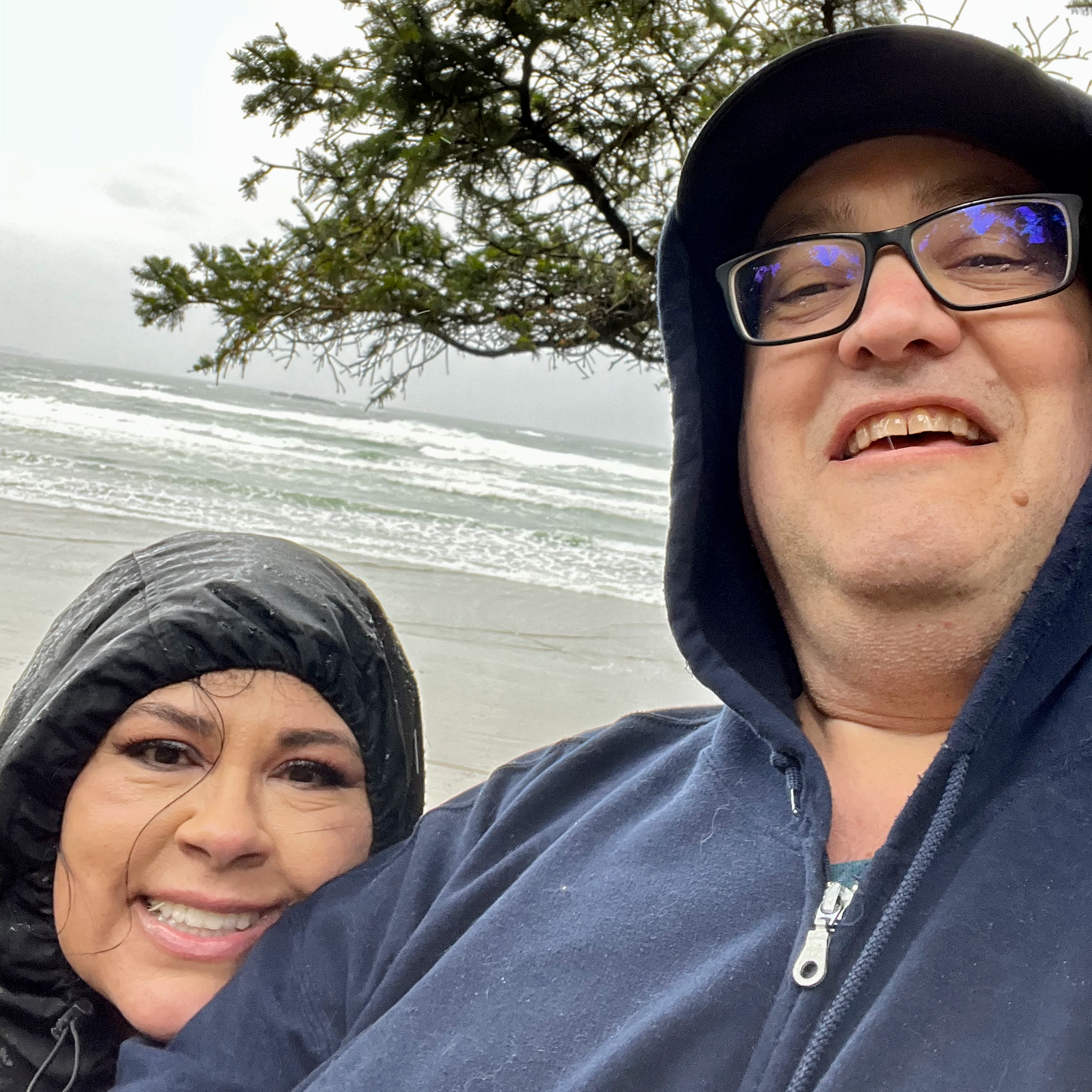
Recent events: Mini-vacation on the Oregon Coast, visits from the Codys and John January, working at the office, Kate’s graduation, Graham’s birthday
Recently accomplished: Replaced jack in the Ibanez, lawn mowing, Portland Heritage trees, called before I dug, mail for Mother, paid taxes, planted grass and root vegetables
Imperative To Do: Go on a bike ride, fix Graham’s bass, store CDs, Graham’s interview, buy new grill, landfill trip
Recent listening: “Crazy Little Thing Called Love” by Queen., Hidden Brain, Planet Money, Unlimited Love by Red Hot Chili Peppers, The Miseducation of Lauryn Hill,
Recent viewing: Better Call Saul (season 5), Billions, Severance, Slow Horses, The After Party, The Power of the Dog, Cowboy Bebop (live action), Lost In Space
Recent playing: Wordle, Quordle
Recent events: Drew Eubanks signed by Portland, Thomas visited, snow in April including a fallen tree
The Crickets, led by Buddy Holly, had their first hit with “That’ll Be The Day” in 1957. Many more hits would follow for Buddy Holly and the Crickets until his tragic death on February 3, 1959. He had just left a gig at the Surf Ballroom in Clear Lake, Iowa, when his plane crashed in the middle of a frozen cornfield. All three passengers – Holly, Richie Valens and J.P. “The Big Bopper” Richardson – and the pilot were killed instantly.
Last summer I visited the site of the crash which is only 45 minutes from where I grew up. There are no signs on the gravel roads leading to the cornfield and there is no dedicated parking. Once you get near, though, the presence of other visitors is soon evident.
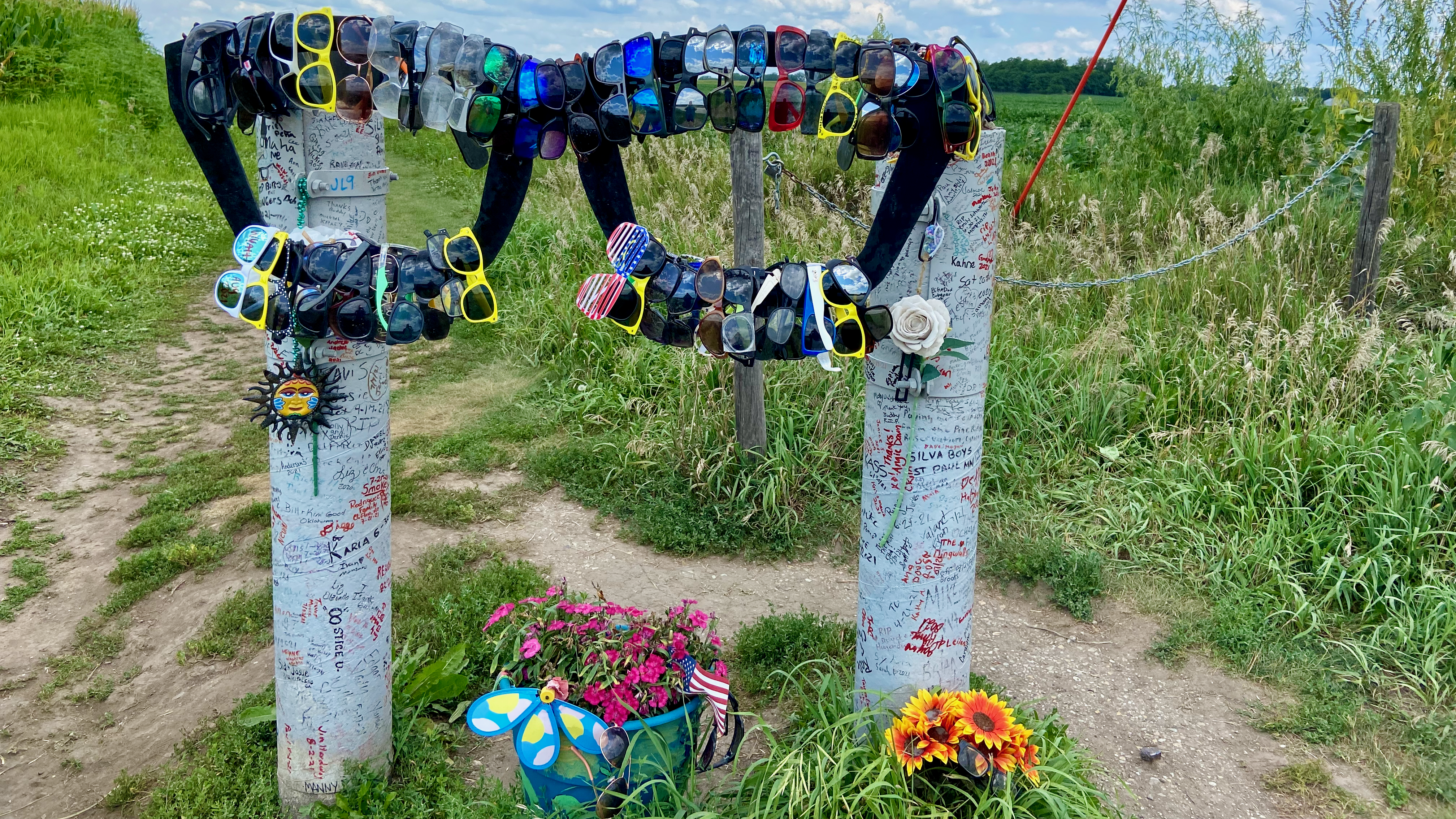
The site lies at the end of a half mile walk along a dirt road with weeds and grass growing in the center. There is a small entrance at the start of the road that is festooned with horn rimmed glasses, flowers and other mementos.
As I walked past the entrance and down the half mile path to the crash site, I couldn’t help but notice something remarkable – crickets! Every person I encountered on the path I asked, “Can you believe it? Crickets!” The younger ones looked puzzled but the people my age nodded politely and kept walking back towards their car. Eventually, I stopped telling people about the crickets.
As I walked out of the cornfield and approached the entrance, a man about my age walked towards me in the opposite direction. I said to him, “I can’t believe the crickets!” He looked at me puzzled at first and then realized what I meant. He pointed at his ears and said, “I can’t hear high frequencies any more.”
As he walked by me, I stopped for a moment, pulled the hearing aids out of my ears and I could no longer hear the crickets. I put them back in and the crickets were audible again.
On that day, I was extra grateful for my hearing aids because they helped me hear the crickets singing for Buddy Holly.