Author: Mitchell Laurren-Ring

  • Medications

    I was diagnosed with type 2 diabetes on September 2, 2009. By then, I was already being treated for hypertension, high cholesterol and depression. Shortly after my diagnosis, I started tracking my blood glucose levels, initially in the little book you see below and later on my phone. I also began a regimen of medications that would evolve through the years. Here’s where it started:

    Sept 17, 2009

    There were many changes over the years, including supplements, prescriptions and over-the-counter medications. In July 2010, I started an injectable medication called Byetta, which treated my diabetes and was supposed to reduce my appetite. A few years later that was replaced by another injectable called Bydureon. Eventually, Bydureon was replaced by Ozempic. I credit these GLP-1 medications with helping me keep my weight under 400 lb.

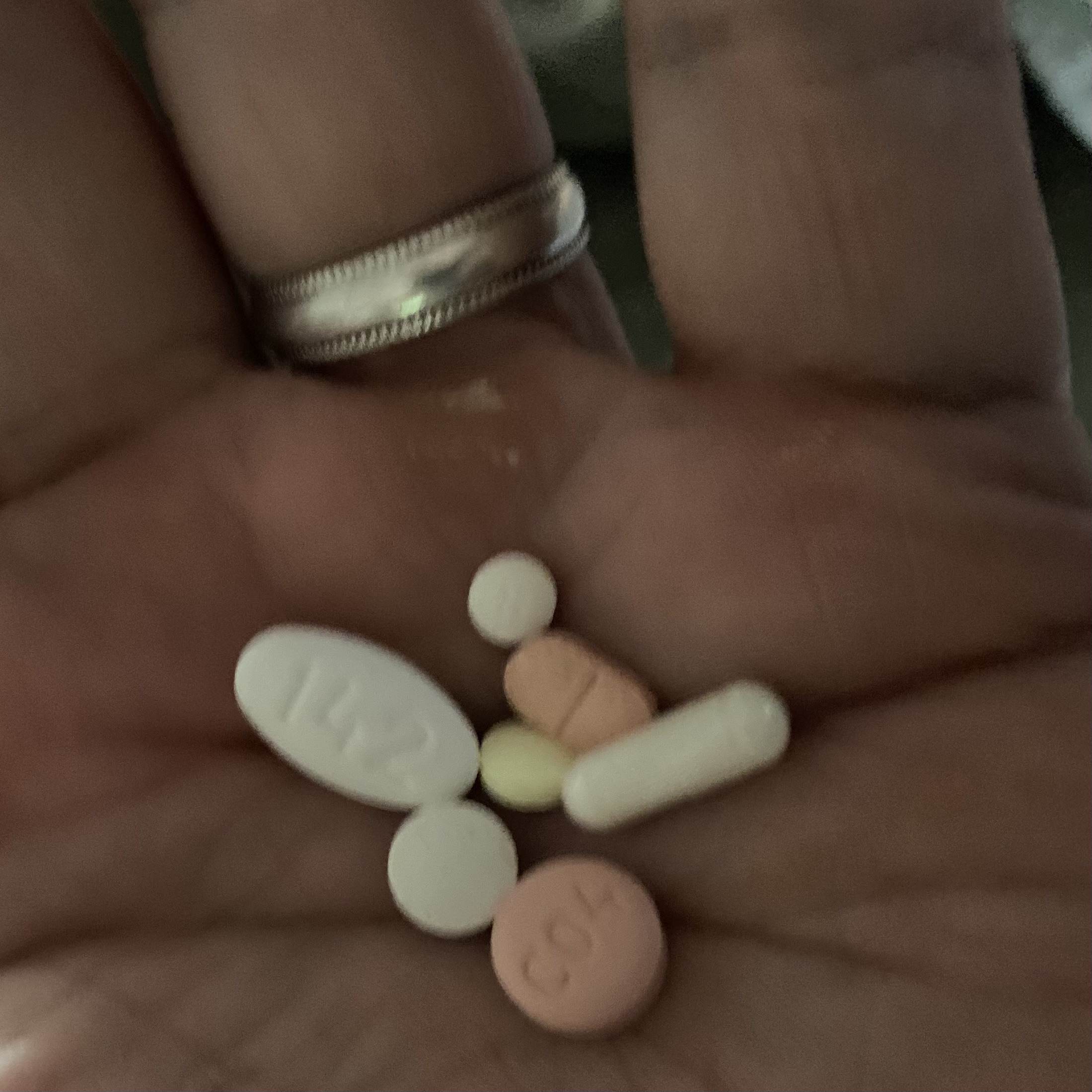
    My regimen is a bit more complicated now because the timing is important.

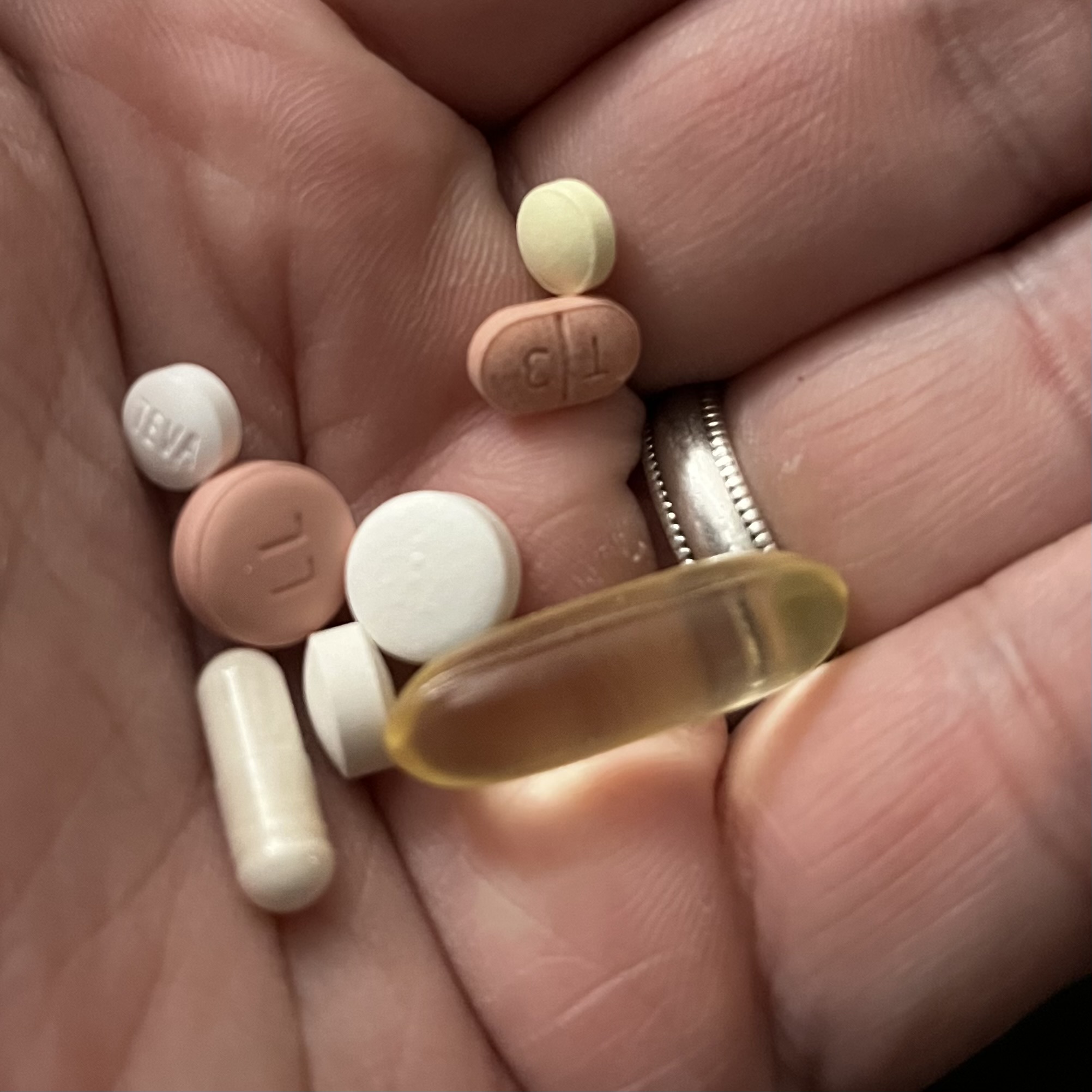
    Omeprazole, on the left, must be taken 30-60 minutes before food. When I wake up in the morning, I open one of those capsules over my mouth and swallow the granules. I am taking this medication for six months following surgery. It reduces the amount of acid my stomach produces, which helps protect my stomach while it heals.

    An hour later I take a daily DS/SADI multivitamin, 150mg (2 x 75) bupropion and Culturelle. The multivitamin is formulated specifically for duodenal switch patients. My digestive system now absorbs less of some nutrients from food, so the multivitamin helps make up for that.

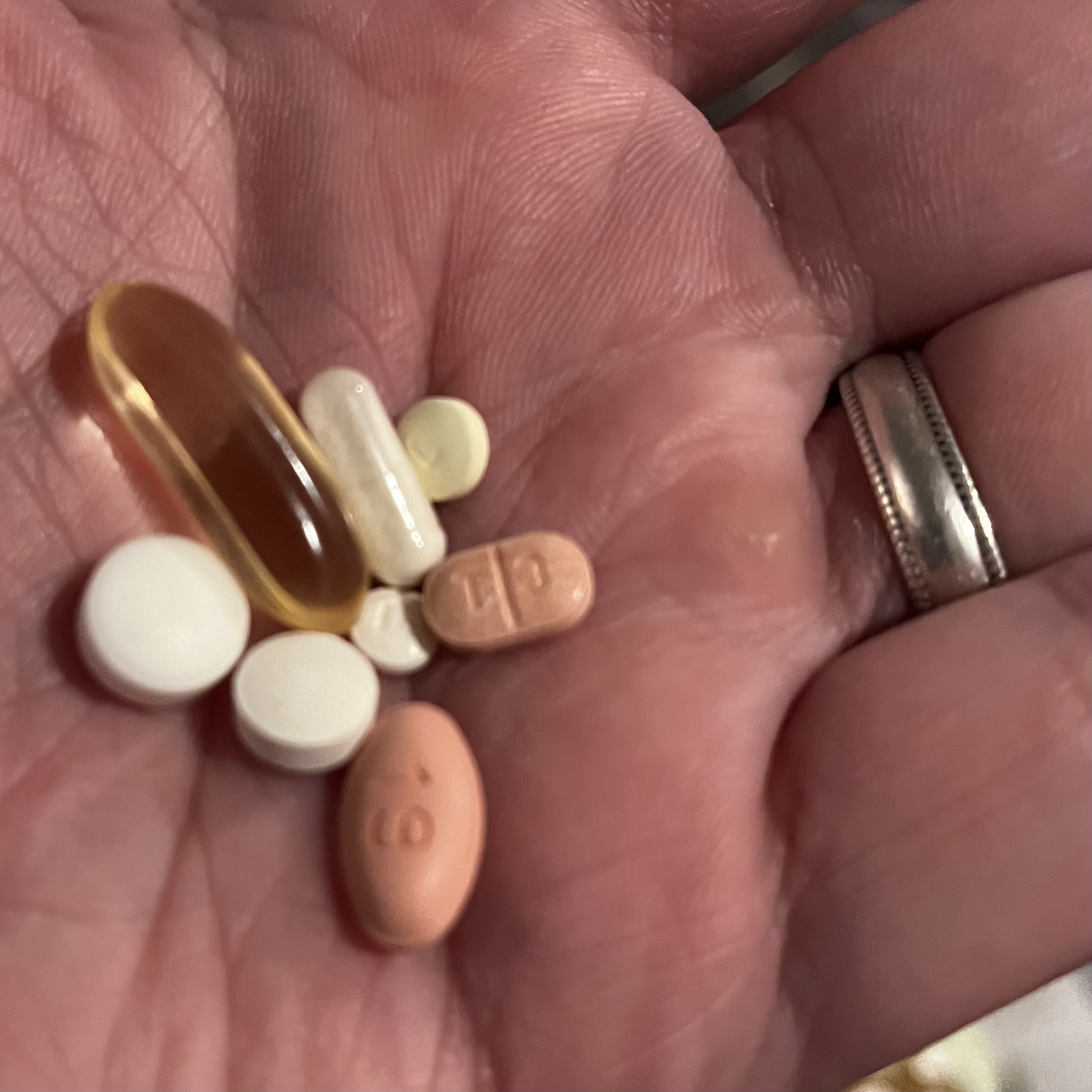
    At noon, I take the first of three doses of Citracal, which contains calcium and vitamin D3. The body can absorb only a limited amount of calcium at a time so it has to be spread throughout the day. Calcium can interfere with iron absorption, so the first dose is at least two hours after the multivitamin, which contains iron.

    At 5 pm I take second doses of Citracal and bupropion. Bupropion is an antidepressant I’ve been taking for many years. Prior to surgery, I took a 300mg extended-release dose once a day in the morning. Because extended-release medications may not be fully absorbed after a duodenal switch, I take the immediate-release version in two doses. I take the second dose at five because bupropion can be stimulating and could interfere with sleep if taken later.

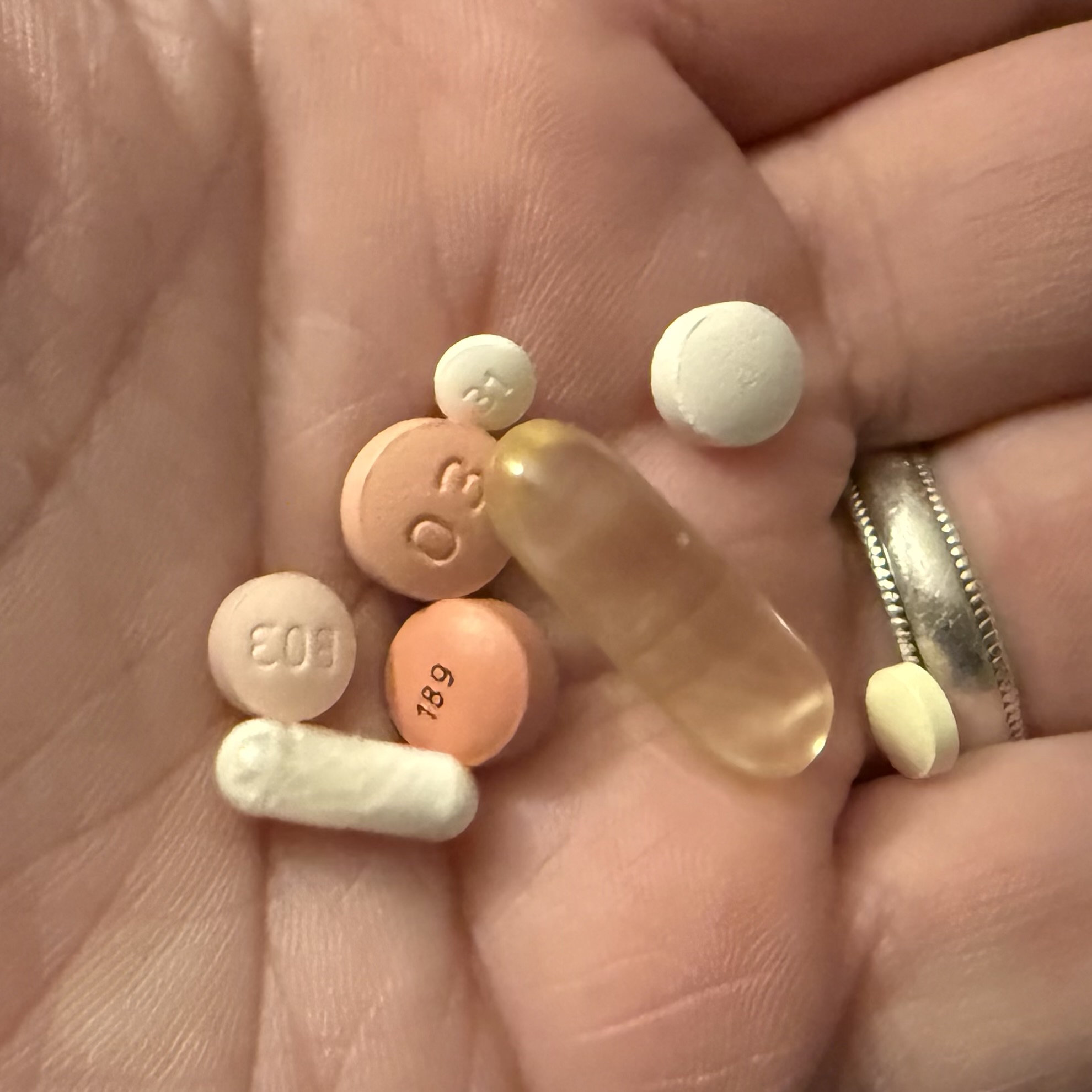
    At bedtime, I take the final dose of Citracal along with simvastatin for high cholesterol. Because the body produces most of its cholesterol overnight, simvastatin is most effective when taken in the evening.

    I’m fewer medications than I was taking before surgery but managing when I take them has become much more important.
  • Weight

    Weight has been a dominant fact of my life for as long as I can remember. I first began tracking my weight around 1990 but lost the earliest data. This graph uses logs I entered in a spreadsheet for about 20 years and then, after a gap of not keeping track, picks up again with data from Apple Health.

    The chart is interactive. Hover over a point—or tap it on a touch device—to see the date, weight, and any note associated with it. You can zoom and pan through the timeline, use the slider at the bottom to focus on a particular period, or use the 1y, 5y, 10y, and All buttons to change the view.

    The graph contains a lot of my life. There are diets in there, bike commutes, periods when I walked everywhere, stressful stretches, successes that lasted months or years, and many occasions when I lost a substantial amount of weight only to gain it back.

    Some of the notes are full of hope and determination, but many are riddled with defeat and despair. There is much self-loathing. Sometimes it became too much and I didn’t want to step on the scale for a long time, and so there are gaps.

    Today I stepped on the scale and it read 299.0 pounds. That is a number I thought I would never see again.

  • Vital Statistics

    Reading: none

    Listening: Making Sense with Sam Harris, This American Life, Robot or Not

    Viewing: The Gentlemen, The Tick, Tires, In the Eye of the Storm

    Events: Bought a suit for Thomas & Aine’s wedding

    Accomplished: Grocery shopping, fall grass planting & fertilization, clothes shopping

    Up next: Clean the roof and gutters, birthday party catering, clear off the deck

    Weight: 299.8 lbs

    2026 weight loss: 75 lbs

    Average daily steps: 8,402

    Average sleep: 6:47 hours

    Average daily calories: under 1,000

    Countdown to Stage 4 diet: 5 days

    Resting heart rate: 53 bpm

    Cardio fitness: 25.0 VO2 max

    Blood glucose range: 75-93 mg/dL

    Latest blood pressure: 145/81

  • Vital Statistics

    Reading: none

    Listening: Making Sense with Sam Harris

    Viewing: DogMan, Ted Lasso, Silo, Stuart Fails to Save the Universe, Conan O’Brien Must Gi

    Events: BG drop-off

    Accomplished: Grocery shopping, postcard to my mom, laundry

    Up next: Clean the roof and gutters, fall grass planting, clothes shopping, birthday party preparations

    Weight: 299.8 lbs

    2026 weight loss: 75 lbs

    Average daily steps: 7,450

    Average sleep: 7:16 hours

    Average daily calories: under 1,000

    Countdown to Stage 4 diet: 5 12 days

    Resting heart rate: 53 bpm

    Cardio fitness: 24.8 VO2 max

    Blood glucose range: 75-93 mg/dL

    Latest blood pressure: 143/81

  • Walking

    When I first met with my bariatric surgeon, I made a single note: “120bpm, 1–3 hours per week.” Later I wrote this under it:

    • 1 hour = 15 x 4
    • 2 = 15 x 8
    • 2:30 = 15 x 10
    • 3 = 15 x 12

    This became one of my guiding principles, and I used walking to achieve it. I also used my Apple Watch with the Fitness app to measure performance and progress. For goal setting, I used an app called Streaks, which integrates with Apple Health to let you set goals like “2 hours a week with heart rate above zone 1” and “Walk 6000 steps a day”. There’s also one for closing all your Activity Rings.

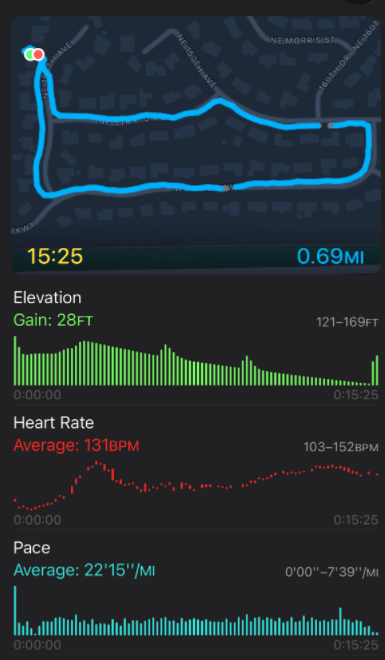
    My first walk was just 0.69 miles around the “block” near our house on March 25. I rated the effort “Hard” and walked at a pace of 22:15/mile. My heart rate was below 120 bpm for just 3:28 of the 15:25 workout.

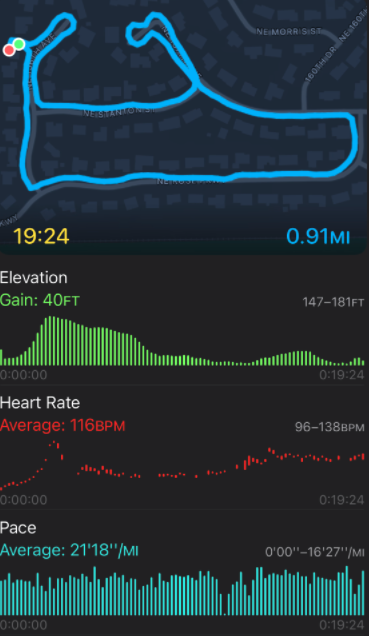
    Within a few weeks, I took Tina’s advice and started including the cul-de-sacs in the walk. By now, my pace had improved to 21:18/mile and I was letting Apple choose my effort: Moderate. Despite the faster pace, I was above 120 bpm for only 6 minutes.

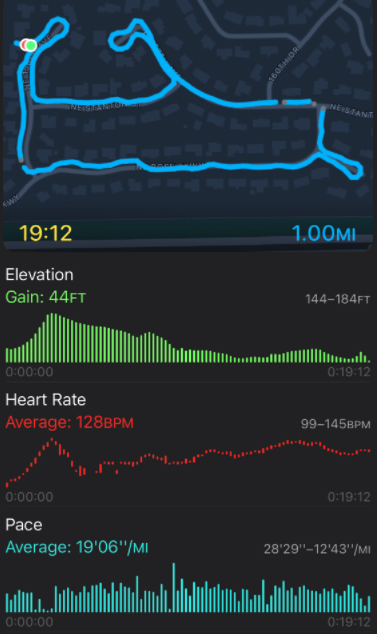
    By May my route had evolved to exactly one mile and included both cul-de-sacs. There is a steep hill right at the beginning of the walk, which is clearly visible in both the elevation and heart rate graphs. At this point, I was purposefully driving up my heart rate by walking faster when I could see it drop on my watch. For this walk, I was above 120 bpm for 13 minutes and achieved a pace of 19:06/mile.

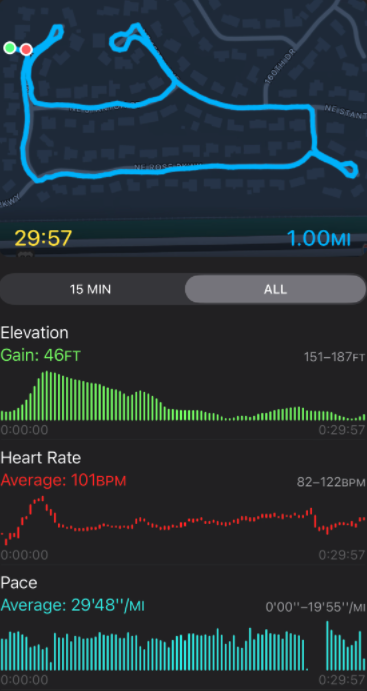
    A week after surgery, I was back on my regular route although much slower, with a pace of 29:48. My heart rate was below 120 for nearly all of the walk. During this time I was not meeting my weekly goal of 2 hours above 120 bpm. It would take another week before I was able to walk at a pace of 21:00/mile, sometimes better. I would meet that goal again.

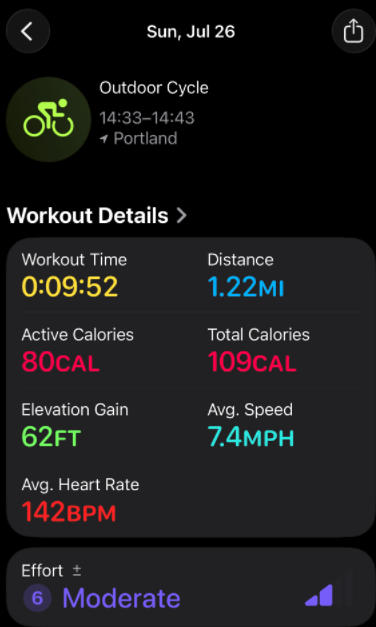
    Near the end of July, I pulled my bike out of the garage, pumped up the tires and started riding laps around the block. My first ride and was only 2 laps. I continued to walk in the morning every day.

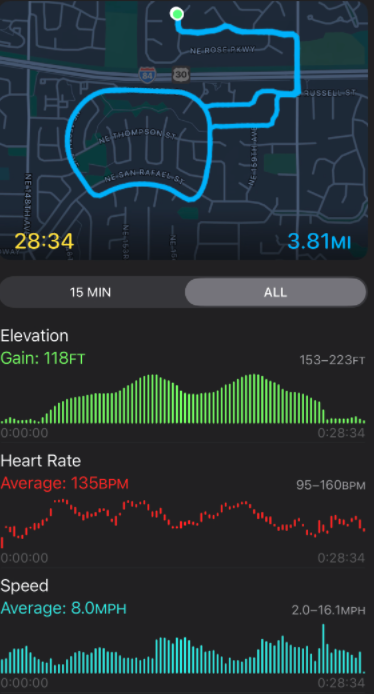
    I was not content to ride circles around the block, so in August I returned to my old training “track” at Summerplace, a retirement community on the other side of the freeway. It’s a particularly good route for interval training because half is uphill and the other half is downhill. It looks like I went around twice here before going home. Cycling is great for pushing my heart rate, and for this ride I was above 120 bpm for all but 4:27 of the 28–minute ride.

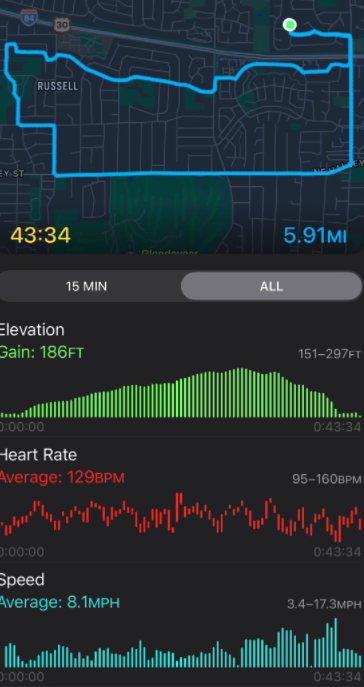
    I was ready to leave the confines of Summerplace on August 19, when I rode to John Luby Park. This is the route that I used to ride on my work commute before COVID. There was more uphill than I had remembered which meant that I exceeded 120 bpm for 30 of the 43 minutes.

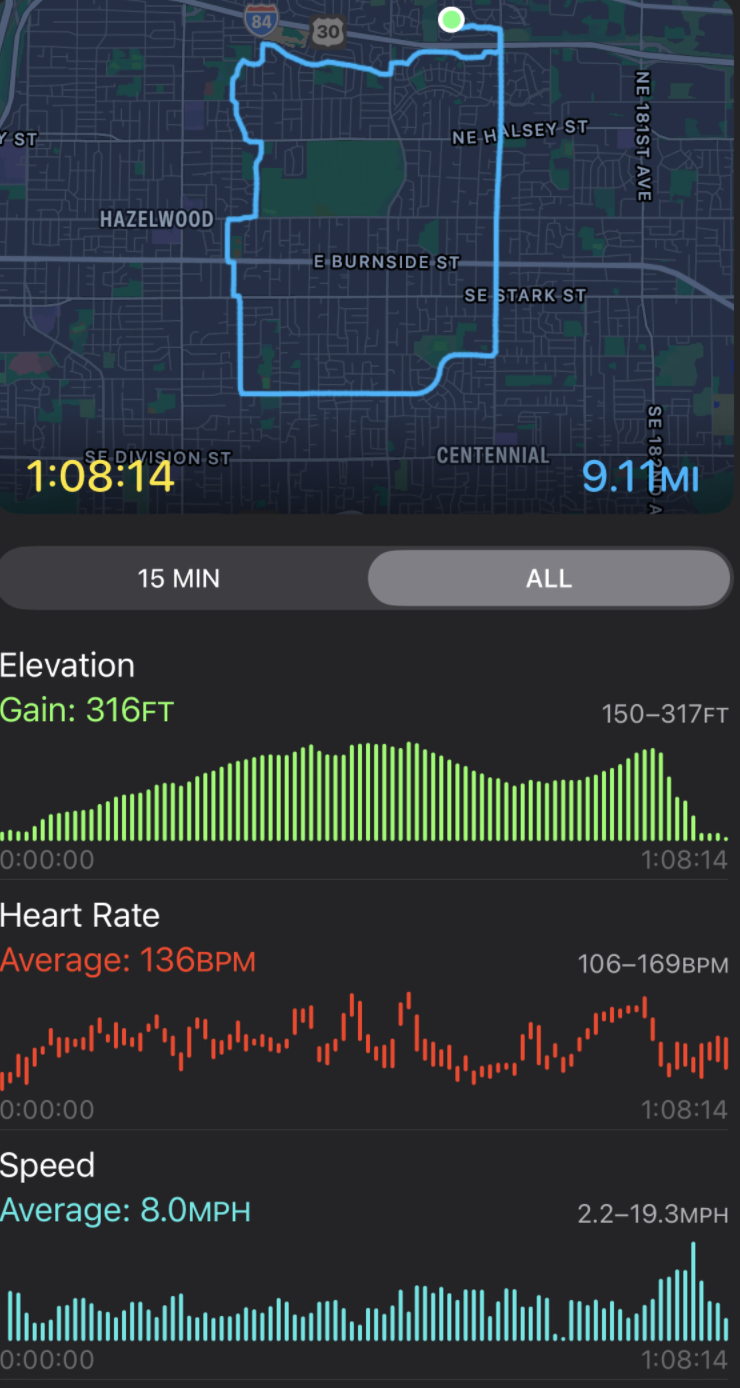
    As August drew to a close, I rode for over an hour on a loop through “The 130s” and Mill Ave: 9.11 miles distance, “Hard” effort and an average heart rate of 136 bpm. Soon I hope to be taking 20– and 40–mile rides regularly.

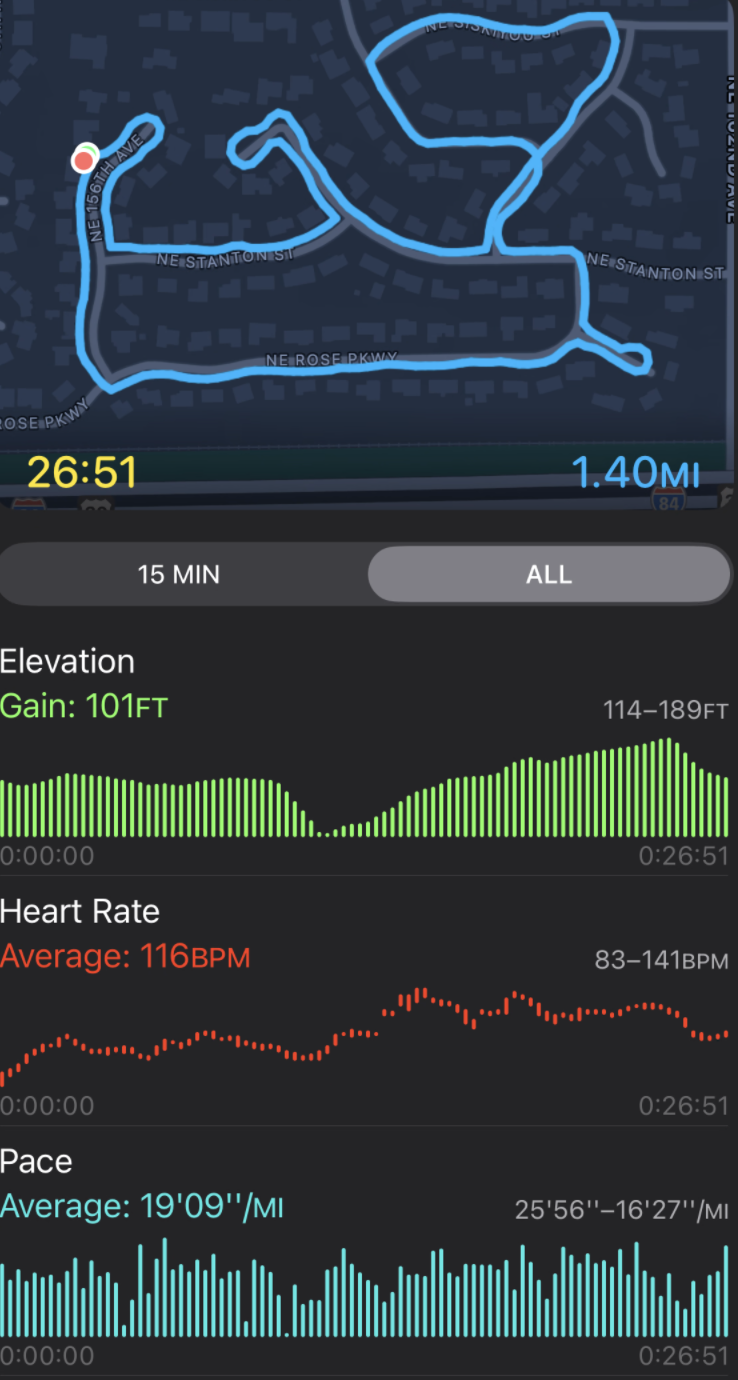
    Tina inspired me to change up my walking route again, so now I’m walking 1.4 miles every morning. Two thirds of the route is uphill, so there’s a real opportunity to push my heart rate again.

  • Vital Statistics

    Reading: Exhalation: Stories by Ted Chiang

    Listening: Radio Lab, Making Sense with Sam Harris

    Viewing: Dark Matter

    Events: Crow Hunting with Tina

    Accomplished: Organize the garage, birthday party invites, yard sale

    Up next: Clean the roof and gutters, fall grass planting, birthday party preparations

    Weight: 304 lbs (last time was 2007)

    2026 weight loss: 70 lbs

    Average daily steps: 7,798

    Average sleep: 7:06 hours

    Average daily calories: under 1,000

    Countdown to Stage 4 diet: 8 days

    Resting heart rate: 56 bpm

    Cardio fitness: 24.4 VO2 max

    Blood glucose average: 89 mg/dL

    Latest blood pressure: 143/82

  • Duodenal Switch Bariatric Surgery

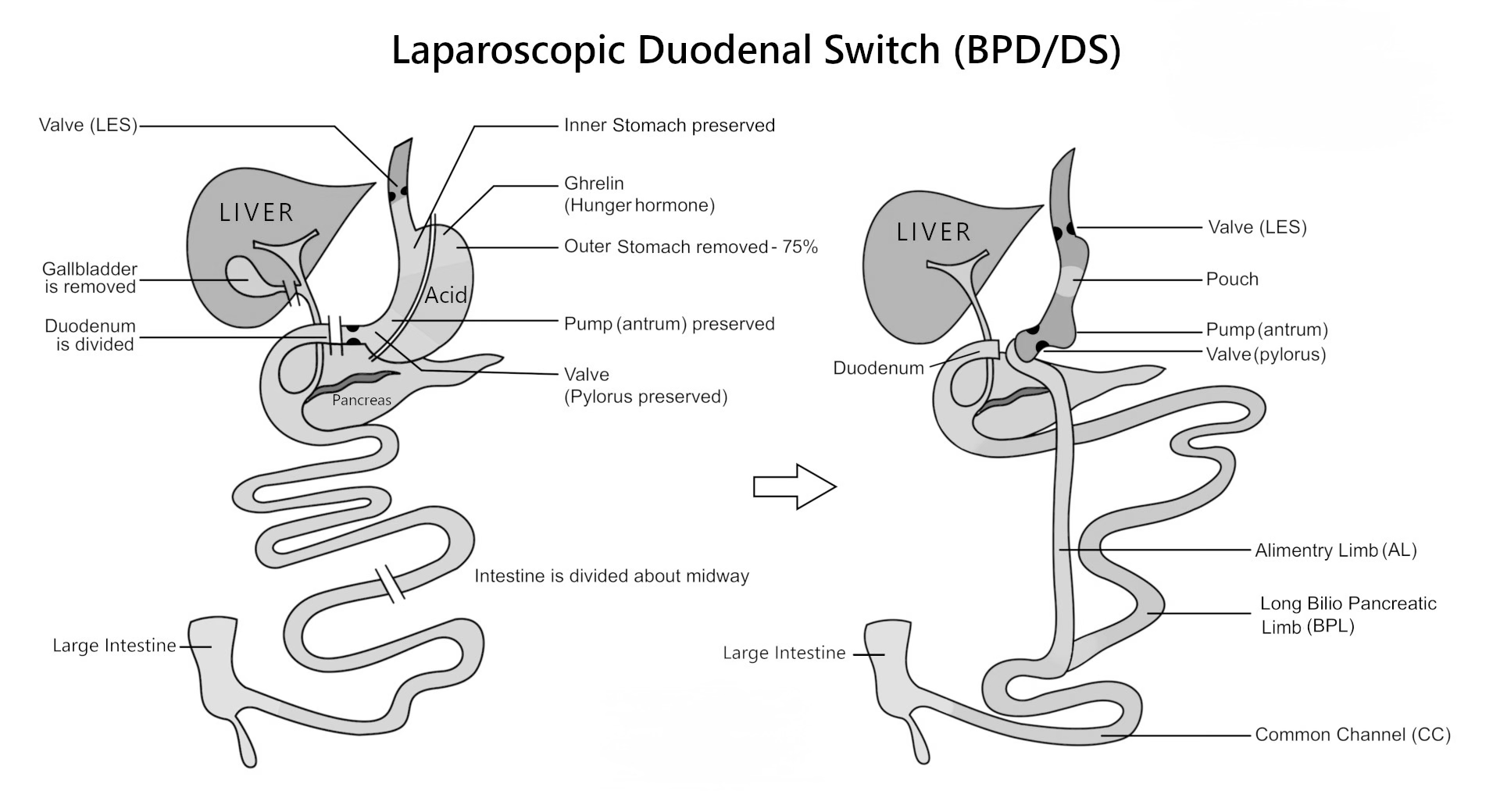
    In the simplest terms, this surgery makes the stomach smaller and reduces the amount of food and calories the body can absorb. 

    This before-and-after diagram above is a little technical but the procedure essentially does this:

    1. About 70-80% of the stomach is removed, leaving a smaller stomach (labeled “pouch” in the diagram)
    2. The duodenum, the passage between the stomach and small intestine,is divided just beyond the stomach.
    3. A cut is made about halfway down the small intestine, essentially dividing it into two parts. We’ll call the top part Intestine 1 and bottom part Intestine 2.
    4. The upper end of Intestine 2 is connected to the portion of the duodenum that is still attached to the pouch.
    5. Intestine 1 remains connected to the liver and pancreas, allowing bile and pancreatic enzymes to continue flowing through it.
    6. The bottom end of Intestine 1 is connected at the bottom of Intestine 2 near where it meets the large intestine.

    The consequences of the surgery are:

    • The stomach is much smaller and can hold far less food than it could before surgery.
    • Food travels through a shorter digestive pathway (Intestine 2), so fewer calories and nutrients are absorbed.
    • Digestive enzymes from the liver and pancreas still mix with the food, but this happens much later in the digestive process, shortly before the contents enter the large intestine.

    All of this leads to rapid weight loss.

    I had this surgery on July 14.

  • Credit Cards

    Contents

    How to use a credit card

    1. Pay for things using the credit card
    2. Set aside money to pay the credit card each time you use it
    3. Pay the statement balance by due date

    What happens when you use a credit card

    1. Pay for items (charge)
    2. Cost of items are added to the current balance
    3. The current balance can never exceed the credit limit
    4. On the statement date, the current balance becomes the statement balance
    5. The statement balance must be paid by the payment due date
    6. Any portion of the unpaid statement balance is subject to interest after the due date

    Best Practices

    1. Pay statement balance when due every month, preferably on auto-pay
    2. Know your statement and payment due dates
    3. Using your credit card does not build credit. Paying without incurring fees builds credit.

    Basic Glossary

    • Statement: a detailed summary of the charges, payments and credits to your account that have occurred since the last statement date
    • Statement date: the cut-off date for transactions that are included on the statement, usually comes a few days after payment due date
    • Statement balance: amount you owe the day of statement date
    • Minimum payment: amount that must be paid by the due date. Failure to pay this amount can result in late fees and negative marks on your credit file.
    • Payment due date: date that minimum payment is due (see late payment fee). Pay the full statement balance by this date to avoid interest charges.
    • Remaining statement balance: statement balance minus any payments that have been made since the statement date

    Extended Glossary

    • Credit limit: Maximum amount of money that can be charged to your account at any given time.
    • Minimum payment: the amount that must be paid by statement date to avoid late fees and negative marks on your credit report. If interest is charged, the minimum payment will include those charges.
    • Late payment fee: a fee charged on the next statement if the minimum payment is not paid by the due date
    • APR: annual percentage rate used to determine how much interest is charged
    • Cash advance: a cash withdrawal from your account. There is usually a per-transaction fee, either a small percentage or a flat fee. Interest accumulation begins immediately until the cash advance amount is paid.
    • Balance transfer: a cash advance that goes directly to pay off a balance on your account with another creditor.
    • Annual fee: Yearly cost of having a premium credit card. Cards that have annual fees usually offer services, benefits, coupons, etc. that will offset the cost.
    • Auto-payment: payment is made automatically each month before the due date from your bank account. Payment options are usually:
      • minimum payment
      • statement balance
      • amount you specify
    • Grace period: the time between statement date and payment due date when no interest is charged for charges made during that time. The grace period often is only valid after the statement balance is paid on the due date.

    Notes on Interest

    • You will never have to pay interest if you always pay your statement balance by the due date.
    • Monthly interest can be roughly calculated by multiplying the current balance by your APR and dividing by 12. Example: a $1200 balance with 20% interest would cost $20 every month.
    • There are separate APR’s for cash advances and purchases. Cash advances usually have a higher APR than purchases and often incur interest immediately with no grace period.
    • Sometimes credit cards will have an introductory APR of 0% that will be in effect for a specific amount of time, usually measured in months. If the balance is not paid by the end of the introductory period, the entire balance can be subject to interest including interest charged retrospectively.
    • Cash advances and balance transfers are sometimes offered with a 0% introductory APR but a one-time fee is charged. Your credit card company may send you checks in the mail that can be used for this purpose. You should shred them immediately.

    Advantages

    1. Cash back/rewards
    2. Can spend during low cash flow
    3. Fraud protection
    4. Travel benefits

    Disadvantages

    1. Misuse leads to excessive interest
    2. The Float: a false sense of security based on bank balances

    Benefits (in progress)

    Some benefits are common across cards. Premium benefits are usually available on cards with a membership fee.

    Statement Credits

    You charge a thing and receive reimbursement for it on your next statement.

    • Travel: reimbursement for common travel expenses like hotel stays, ride sharing, airline incidentals (baggage, seat assignments, etc), and expedited airport security (TSA pre-check).
    • Category credits: utilities, streaming, restaurants
    • Service credits: delivery services
    • Vendors: Saks, Dell
    • Services: Lyft, Uber, Walmart+, DoorDash, Instacart

    Travel

    • Access to member travel booking portals
    • Enhanced status for hotels and airlines
    • Foreign transaction fees waived
    • Insurance: car rental, trip delay, trip cancellation, trip interruption, luggage
    • Free night certificates: offered by co-branded hotel cards like Marriott, Hilton, Wyndham
    • Free checked bag: offered by co-branded airline cards
    • Airport lounge access

    Non-travel Protections

    • Purchase protection
    • Return protection
    • Extended warranty
    • Cell phone protection

    Rewards

    Rewards are complicated.

  • Vital Statistics

    Lower deck finished

    Bike miles in 2022: 0

    Aches & pains: sciatica, right shoulder, left knee

    Current reading: The Seven Habits of Highly Effective People by Stephen R. Covey

    Recent listening: Talking Heads, Making Sense with Sam Harris, Very Bad Wizards

    Recent viewing: Air Disasters, Call the Midwife, Seinfeld, Five Days at Memorial, The Patient

    Recent playing: Wordle, Quordle, Duotrigirdle

    Recent events: Columbia River Gorge adventure, annual birthday party, first public performance, Thomas visited, new glasses (goggles)

    Visited family in Iowa, Graham & Kate got engaged, several family members got Covid

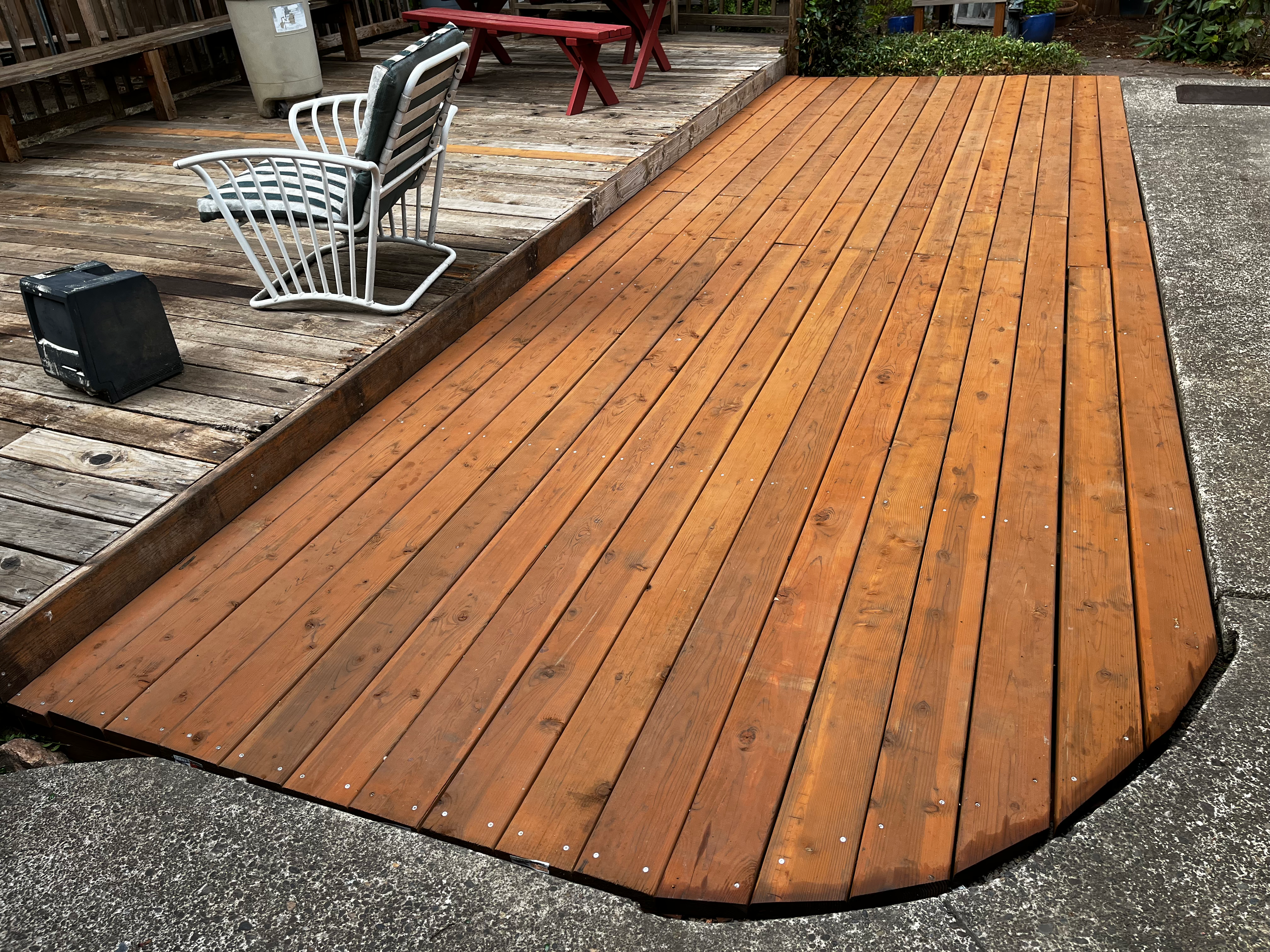
    Recently accomplished: Finished replacing lower deck, fixed ice maker, cleaned shed roof, carpet cleaning

    Imperative To Do: Fix the Spector, fall lawn care, clean the gutters, paint touch-ups

  • Vital Statistics

    With my mom in Iowa

    Bike miles in 2022: 0

    Aches & pains: sciatica

    Current reading: The Seven Habits of Highly Effective People by Stephen R. Covey

    Recent listening: Hidden Brain, Planet Money, This American Life, Crazy Little Thing Called Love, Making Sense with Sam Harris

    Recent viewing: The Sandman, Stranger Things, Hustle, For All Mankind, Surface, Trying, Five Days at Memorial, Black Bird, Synecdoche New York

    Recent playing: Wordle, Quordle, Duotrigirdle

    Recent events: Visited family in Iowa, Graham & Kate got engaged, several family members got Covid

    Recently accomplished: Deck demolition, credit card churning, new glasses, yard debris disposal, landfill trip, lumber purchase, bought “new” grill

    Imperative To Do: Lower deck replacement, fix ice maker, clean shed roof, clean gutters, fix the Spector