293.8 lb
Weight
81 lb
Lost in 2026
39.9
BMI
7,420
Average daily steps
55 bpm
Resting heart rate
26.2
VO2 max
7:26
Average sleep
1,465
Average daily calories
7 days
Countdown to Wedding
Weight
Lost in 2026
BMI
Average daily steps
Resting heart rate
VO2 max
Average sleep
Average daily calories
Countdown to Wedding
Weight
Lost in 2026
Average daily steps
Average sleep
Average daily calories
Resting heart rate
VO2 max
Latest blood pressure
Days in Stage 4
I was diagnosed with type 2 diabetes on September 2, 2009. By then, I was already being treated for hypertension, high cholesterol and depression. Shortly after my diagnosis, I started tracking my blood glucose levels, initially in the little book you see below and later on my phone. I also began a regimen of medications that would evolve through the years. Here’s where it started:

Sept 17, 2009
There were many changes over the years, including supplements, prescriptions and over-the-counter medications. In July 2010, I started an injectable medication called Byetta, which treated my diabetes and was supposed to reduce my appetite. A few years later that was replaced by another injectable called Bydureon. Eventually, Bydureon was replaced by Ozempic. I credit these GLP-1 medications with helping me keep my weight under 400 lb.

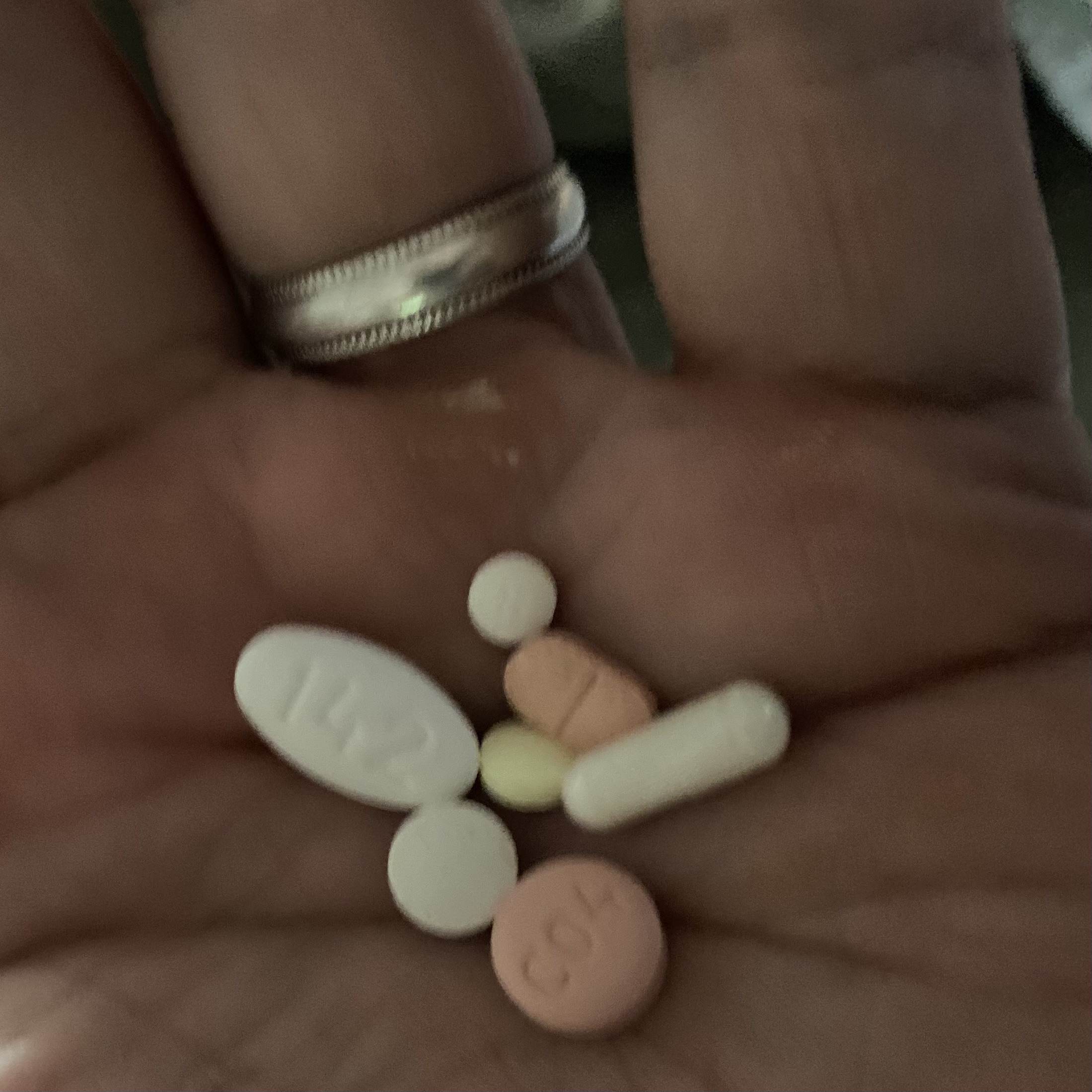
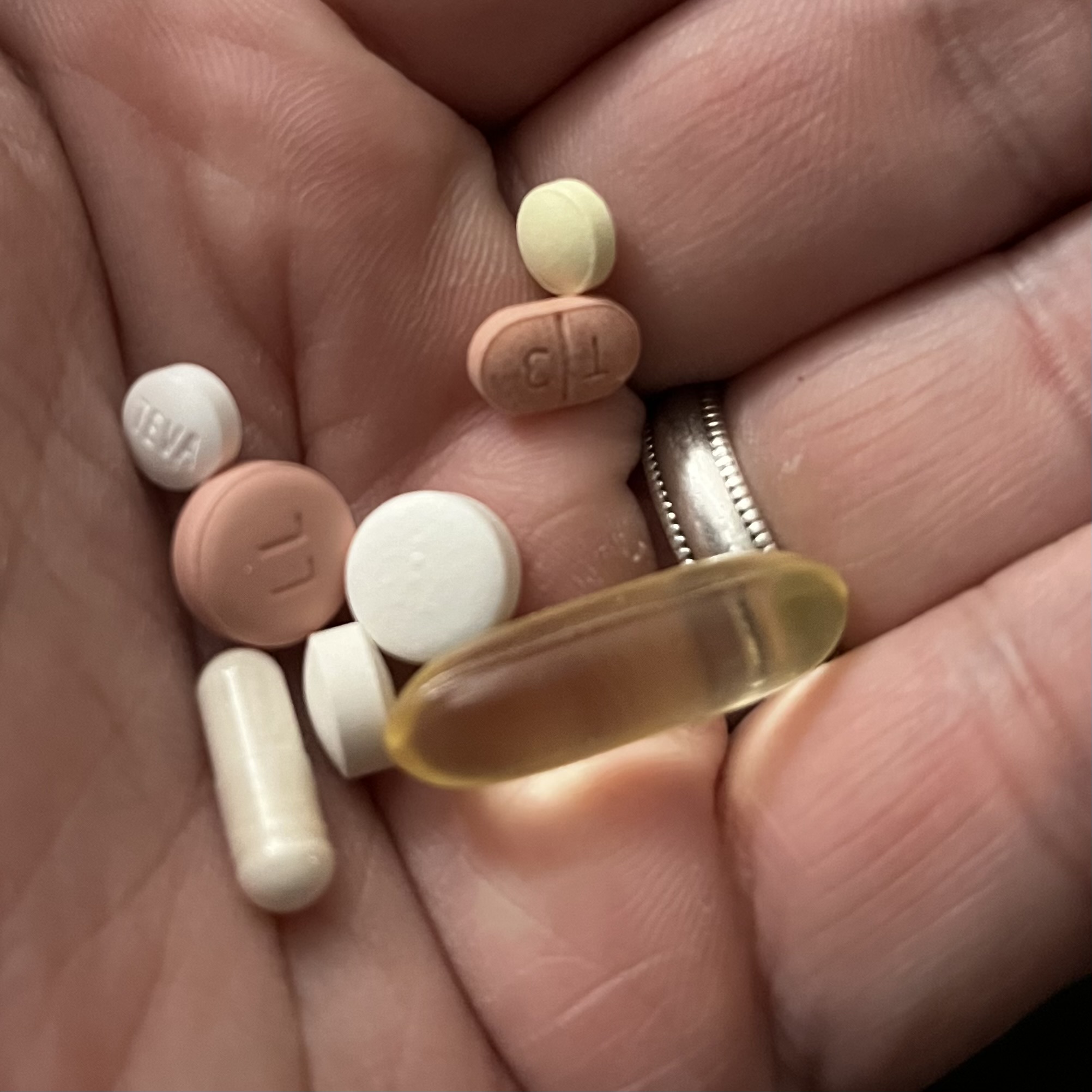
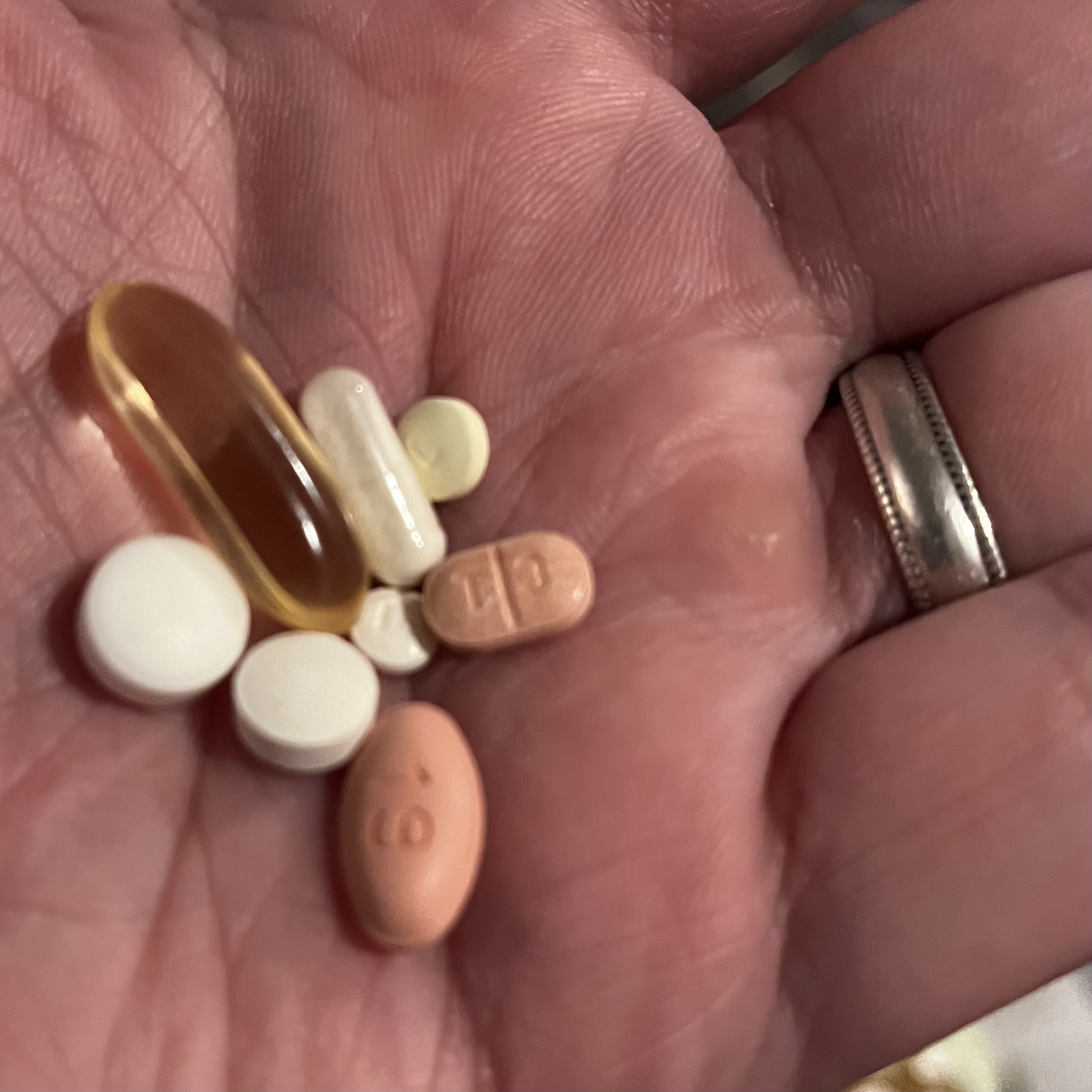
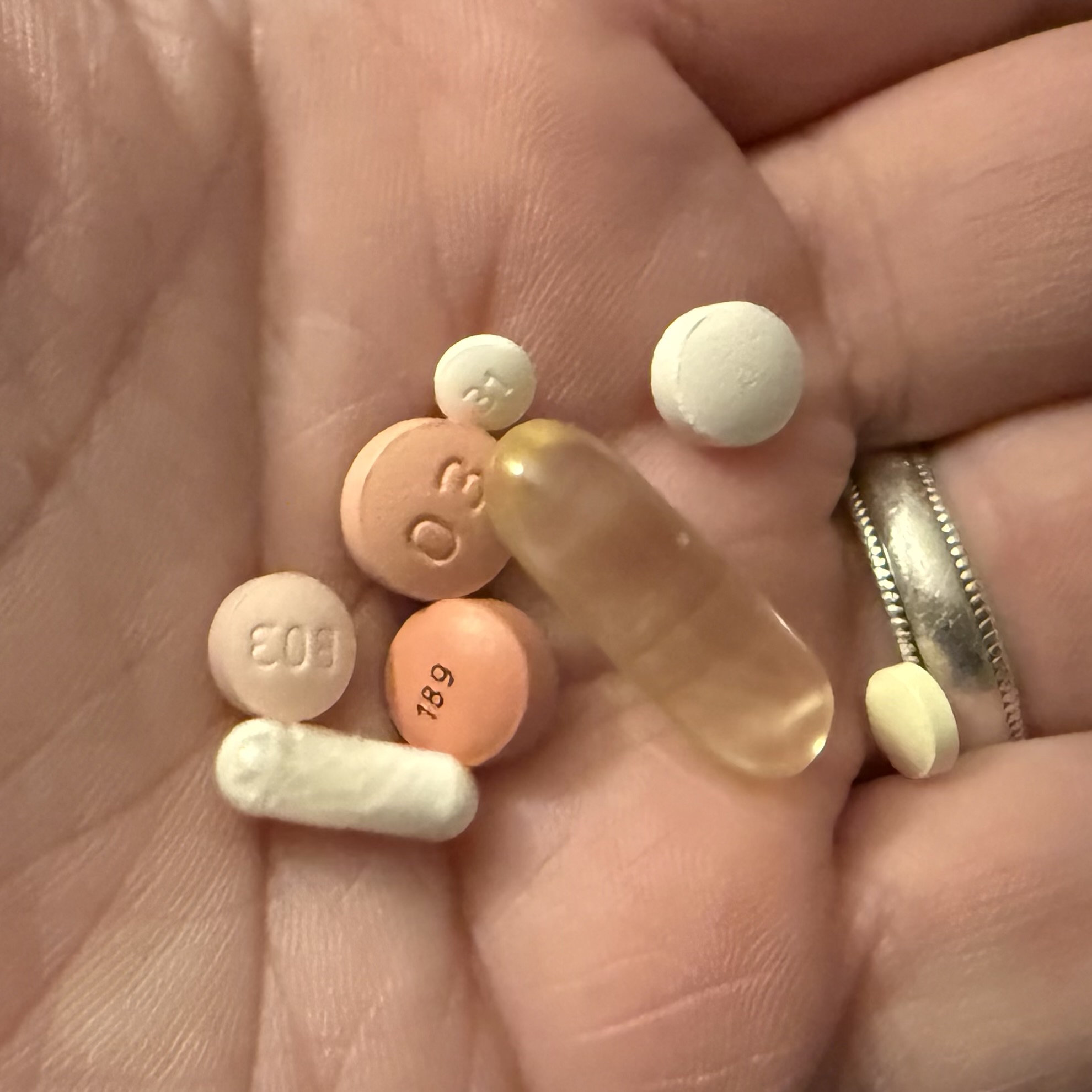

My regimen is a bit more complicated now because the timing is important.

Omeprazole, on the left, must be taken 30-60 minutes before food. When I wake up in the morning, I open one of those capsules over my mouth and swallow the granules. I am taking this medication for six months following surgery. It reduces the amount of acid my stomach produces, which helps protect my stomach while it heals.
An hour later I take a daily DS/SADI multivitamin, 150mg (2 x 75) bupropion and Culturelle. The multivitamin is formulated specifically for duodenal switch patients. My digestive system now absorbs less of some nutrients from food, so the multivitamin helps make up for that.
At noon, I take the first of three doses of Citracal, which contains calcium and vitamin D3. The body can absorb only a limited amount of calcium at a time so it has to be spread throughout the day. Calcium can interfere with iron absorption, so the first dose is at least two hours after the multivitamin, which contains iron.
At 5 pm I take second doses of Citracal and bupropion. Bupropion is an antidepressant I’ve been taking for many years. Prior to surgery, I took a 300mg extended-release dose once a day in the morning. Because extended-release medications may not be fully absorbed after a duodenal switch, I take the immediate-release version in two doses. I take the second dose at five because bupropion can be stimulating and could interfere with sleep if taken later.
At bedtime, I take the final dose of Citracal along with simvastatin for high cholesterol. Because the body produces most of its cholesterol overnight, simvastatin is most effective when taken in the evening.
I’m fewer medications than I was taking before surgery but managing when I take them has become much more important.
Weight has been a dominant fact of my life for as long as I can remember. I first began tracking my weight around 1990 but lost the earliest data. This graph uses logs I entered in a spreadsheet for about 20 years and then, after a gap of not keeping track, picks up again with data from Apple Health.
The chart is interactive. Hover over a point—or tap it on a touch device—to see the date, weight, and any note associated with it. You can zoom and pan through the timeline, use the slider at the bottom to focus on a particular period, or use the 1y, 5y, 10y, and All buttons to change the view.
The graph contains a lot of my life. There are diets in there, bike commutes, periods when I walked everywhere, stressful stretches, successes that lasted months or years, and many occasions when I lost a substantial amount of weight only to gain it back.
Some of the notes are full of hope and determination, but many are riddled with defeat and despair. There is much self-loathing. Sometimes it became too much and I didn’t want to step on the scale for a long time, and so there are gaps.
Today I stepped on the scale and it read 299.0 pounds. That is a number I thought I would never see again.
Reading: none
Listening: Making Sense with Sam Harris
Viewing: DogMan, Ted Lasso, Silo, Stuart Fails to Save the Universe, Conan O’Brien Must Gi
Events: BG drop-off
Accomplished: Grocery shopping, postcard to my mom, laundry
Up next: Clean the roof and gutters, fall grass planting, clothes shopping, birthday party preparations
Weight: 299.8 lbs
2026 weight loss: 75 lbs
Average daily steps: 7,450
Average sleep: 7:16 hours
Average daily calories: under 1,000
Countdown to Stage 4 diet: 5 12 days
Resting heart rate: 53 bpm
Cardio fitness: 24.8 VO2 max
Blood glucose range: 75-93 mg/dL
Latest blood pressure: 143/81
When I first met with my bariatric surgeon, I made a single note: “120bpm, 1–3 hours per week.” Later I wrote this under it:
1 hour = 15 x 42 = 15 x 82:30 = 15 x 103 = 15 x 12This became one of my guiding principles, and I used walking to achieve it. I also used my Apple Watch with the Fitness app to measure performance and progress. For goal setting, I used an app called Streaks, which integrates with Apple Health to let you set goals like “2 hours a week with heart rate above zone 1” and “Walk 6000 steps a day”. There’s also one for closing all your Activity Rings.
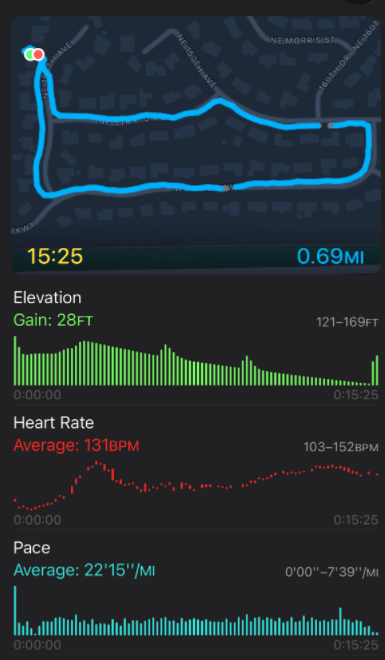
My first walk was just 0.69 miles around the “block” near our house on March 25. I rated the effort “Hard” and walked at a pace of 22:15/mile. My heart rate was below 120 bpm for just 3:28 of the 15:25 workout.
Within a few weeks, I took Tina’s advice and started including the cul-de-sacs in the walk. By now, my pace had improved to 21:18/mile and I was letting Apple choose my effort: Moderate. Despite the faster pace, I was above 120 bpm for only 6 minutes.
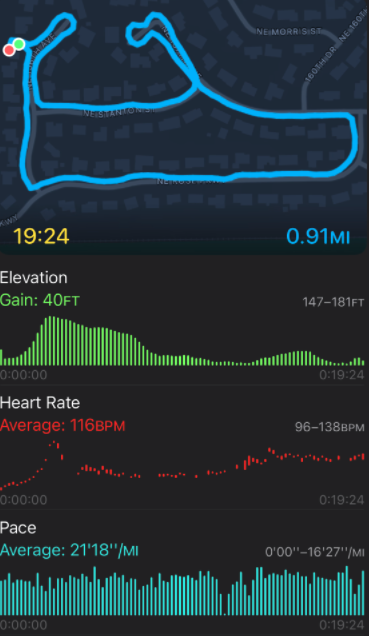
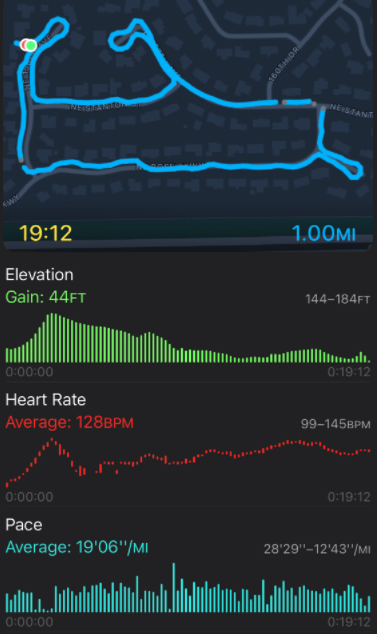
By May my route had evolved to exactly one mile and included both cul-de-sacs. There is a steep hill right at the beginning of the walk, which is clearly visible in both the elevation and heart rate graphs. At this point, I was purposefully driving up my heart rate by walking faster when I could see it drop on my watch. For this walk, I was above 120 bpm for 13 minutes and achieved a pace of 19:06/mile.
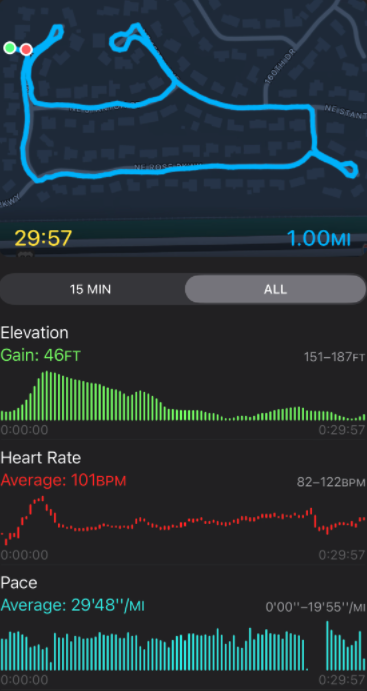
A week after surgery, I was back on my regular route although much slower, with a pace of 29:48. My heart rate was below 120 for nearly all of the walk. During this time I was not meeting my weekly goal of 2 hours above 120 bpm. It would take another week before I was able to walk at a pace of 21:00/mile, sometimes better. I would meet that goal again.
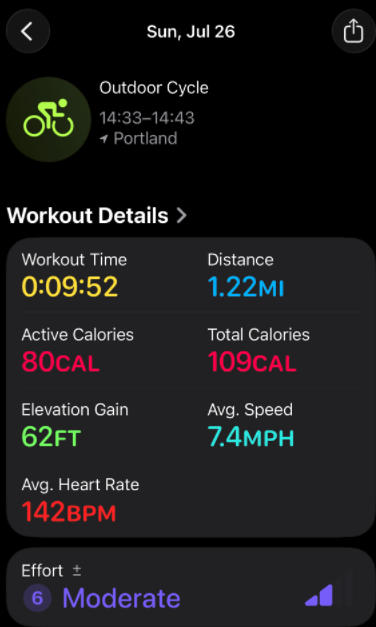
Near the end of July, I pulled my bike out of the garage, pumped up the tires and started riding laps around the block. My first ride was only 2 laps. I continued to walk in the morning every day.
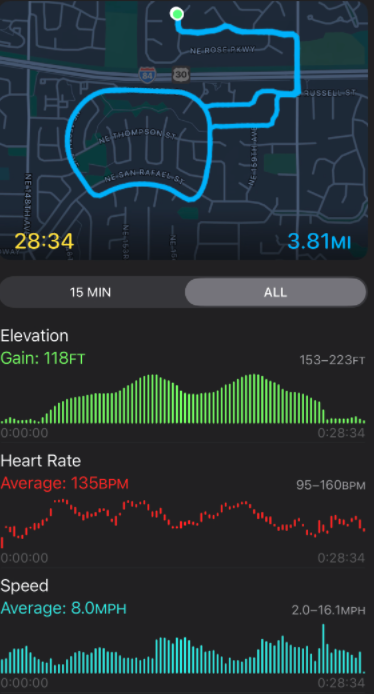
I was not content to ride circles around the block, so in August I returned to my old training “track” at Summerplace, a retirement community on the other side of the freeway. It’s a particularly good route for interval training because half is uphill and the other half is downhill. It looks like I went around twice here before going home. Cycling is great for pushing my heart rate, and for this ride I was above 120 bpm for all but 4:27 of the 28–minute ride.
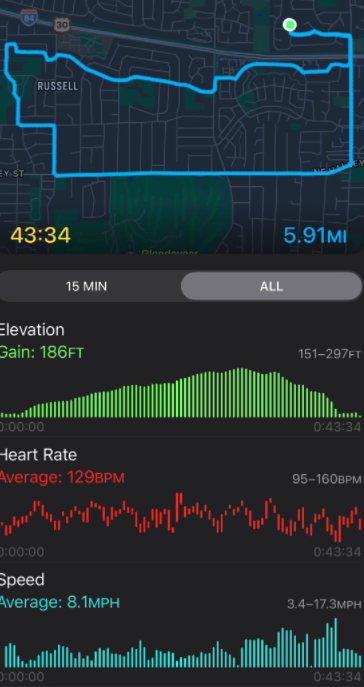
I was ready to leave the confines of Summerplace on August 19, when I rode to John Luby Park. This is the route that I used to ride on my work commute before COVID. There was more uphill than I had remembered which meant that I exceeded 120 bpm for 30 of the 43 minutes.
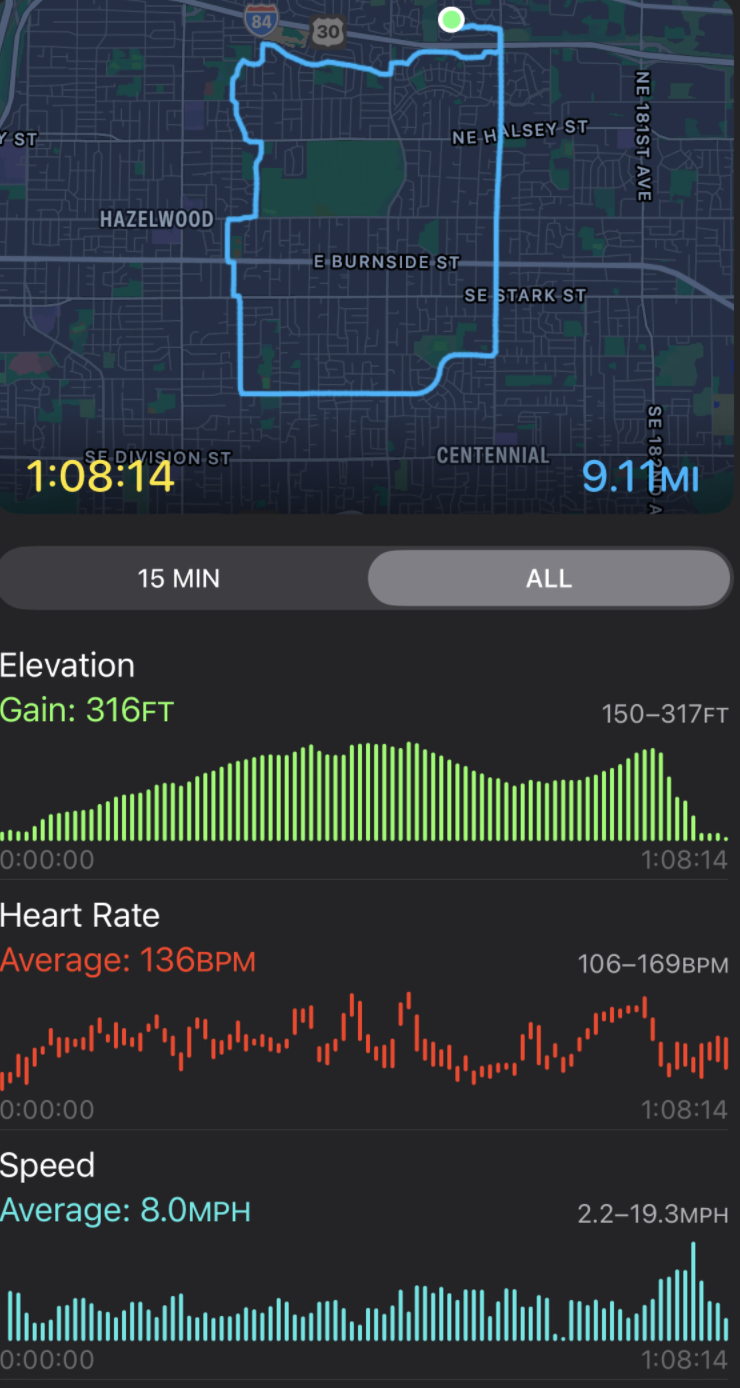
As August drew to a close, I rode for over an hour on a loop through “The 130s” and Mill Ave: 9.11 miles distance, “Hard” effort and an average heart rate of 136 bpm. Soon I hope to be taking 20– and 40–mile rides regularly.
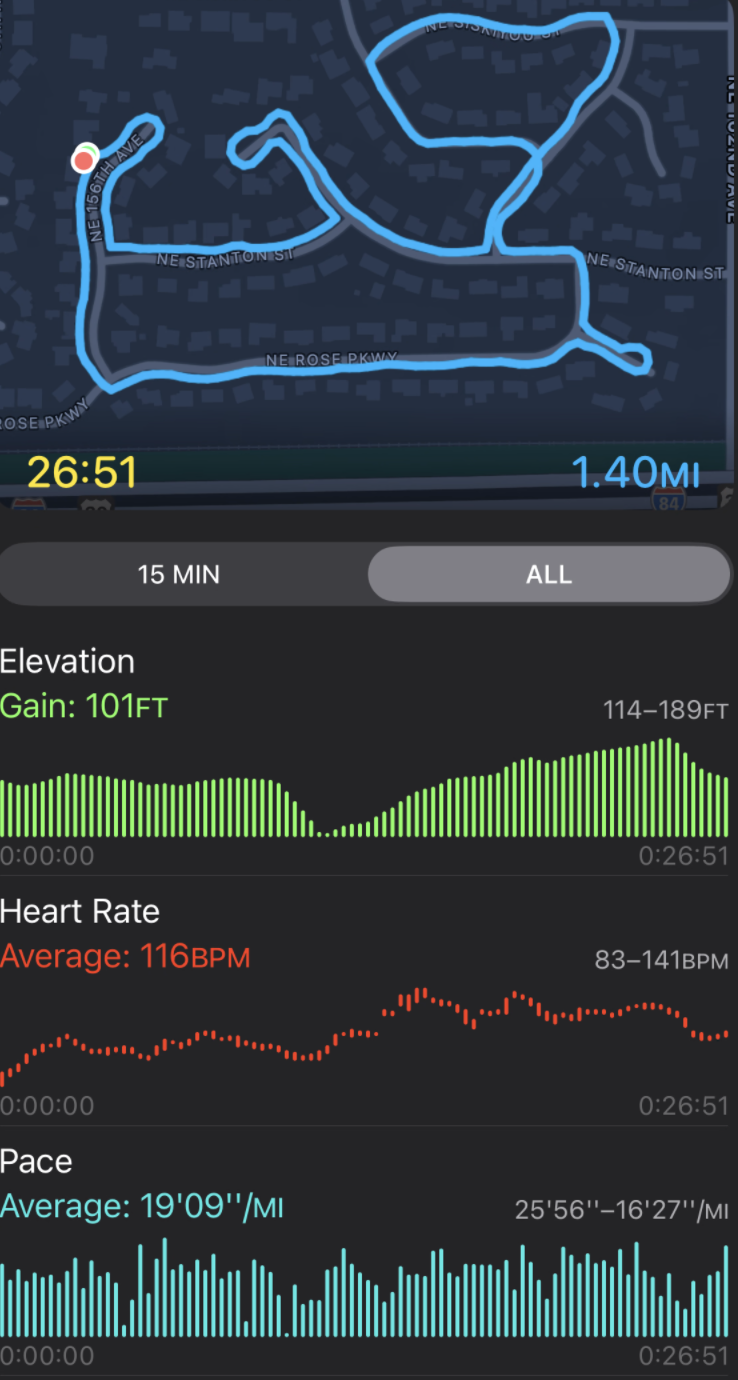
Tina inspired me to change up my walking route again, so now I’m walking 1.4 miles every morning. Two thirds of the route is uphill, so there’s a real opportunity to push my heart rate again.
Reading: Exhalation: Stories by Ted Chiang
Listening: Radio Lab, Making Sense with Sam Harris
Viewing: Dark Matter
Events: Crow Hunting with Tina
Accomplished: Organize the garage, birthday party invites, yard sale
Up next: Clean the roof and gutters, fall grass planting, birthday party preparations
Weight: 304 lbs (last time was 2007)
2026 weight loss: 70 lbs
Average daily steps: 7,798
Average sleep: 7:06 hours
Average daily calories: under 1,000
Countdown to Stage 4 diet: 8 days
Resting heart rate: 56 bpm
Cardio fitness: 24.4 VO2 max
Blood glucose average: 89 mg/dL
Latest blood pressure: 143/82
In the simplest terms, this surgery makes the stomach smaller and reduces the amount of food and calories the body can absorb.
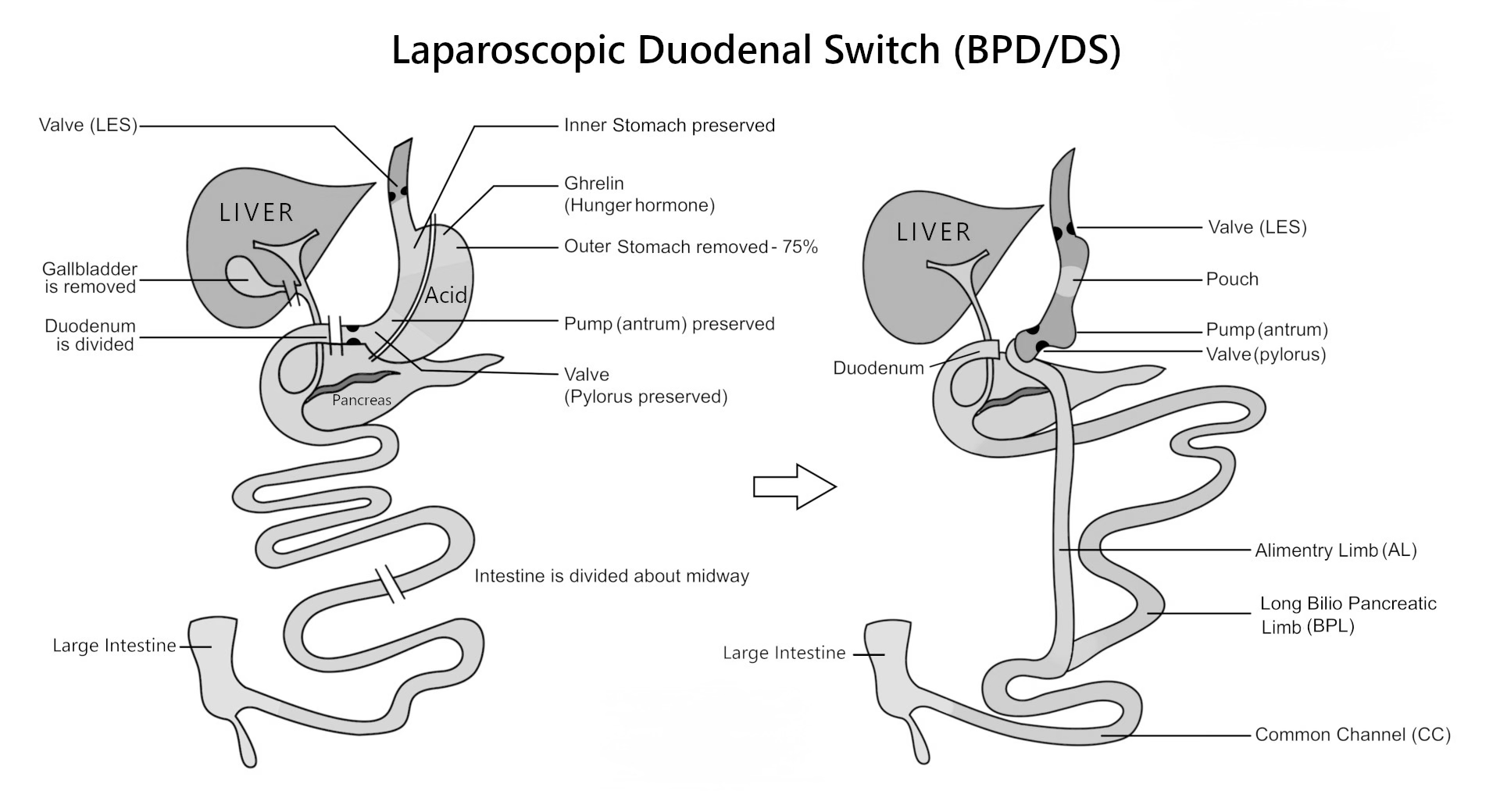
This before-and-after diagram above is a little technical but the procedure essentially does this:
The consequences of the surgery are:
All of this leads to rapid weight loss.
I had this surgery on July 14.
[table]
Time[attr style=”width:50px”],Action
08:00,Wake
08:30,Brush teeth
,Blood sugar
,Start hot water
,Walk
09:00,Make coffee
,Make/eat protein breakfast*
09:15,Begin work
09:30,Medications (second cup)
11:00,Standup
11:30,Lunch: (tbd) calories and (tbd) carbs
13:00,Blood sugar
15:30,Snack
17:30,Chores
18:00,Dinner: (tbd) calories and (tbd) carbs
19:30,Free time for…
,…Mindfulness
,…Music
,…Chores
,…Reading books
,…Second walk
,…TV
22:00,Brush teeth
,Bed
[/table]
* eggs, snack pack, peanut butter toast, cottage cheese, string cheese
As you probably know, we had a very hot summer this year in Portland. During one heat wave, temperatures reached 107 on some days and didn’t get below 75 at night. Round about that time I found myself thirsty quite a lot. It was hot and our air conditioning infrastructure is lacking so I thought it was because of the heat that I was drinking so much water. Around about the same time I also started urinating much more often than I had ever before. Again, I chalked it up to the heat and increased water intake but I still noted a couple of events that were unusual. First, one night I woke up having to urinate which is something that almost never happens to me, especially if I go to the bathroom before I get in bed. Soon it was happening to me every night but I still didn’t put it together.
I also felt incredibly tired most of the time. The last few hours of work each day were very difficult and I would often end up in the comfy chair a few feet from my office, watching MSNBC’s political block. The fatigue had arrived rather gradually and I didn’t really notice it until our Family Camp with Troop 820 in June. When walking long distances there was difficult in terms of muscle fatigue, I chalked it up to the altitude and the weight I had recently gained. It got worse and worse all summer but even these were not clue enough for me.
(more…)