When I first met with my bariatric surgeon, I made a single note: “120bpm, 1–3 hours per week.” Later I wrote this under it:
1 hour = 15 x 4
2 = 15 x 8
2:30 = 15 x 10
3 = 15 x 12
This became one of my guiding principles, and I used walking to achieve it. I also used my Apple Watch with the Fitness app to measure performance and progress. For goal setting, I used an app called Streaks, which integrates with Apple Health to let you set goals like “2 hours a week with heart rate above zone 1” and “Walk 6000 steps a day”. There’s also one for closing all your Activity Rings.
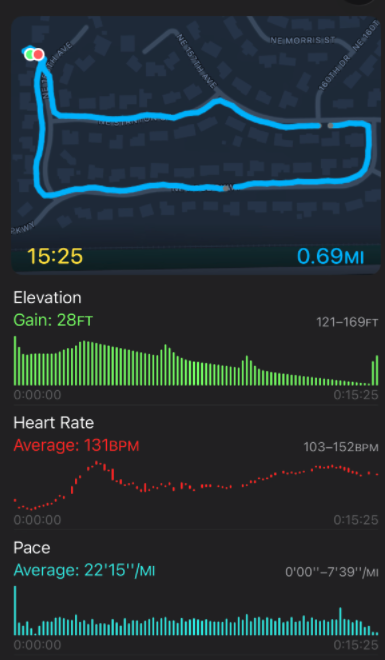
My first walk was just 0.69 miles around the “block” near our house on March 25. I rated the effort “Hard” and walked at a pace of 22:15/mile. My heart rate was below 120 bpm for just 3:28 of the 15:25 workout.
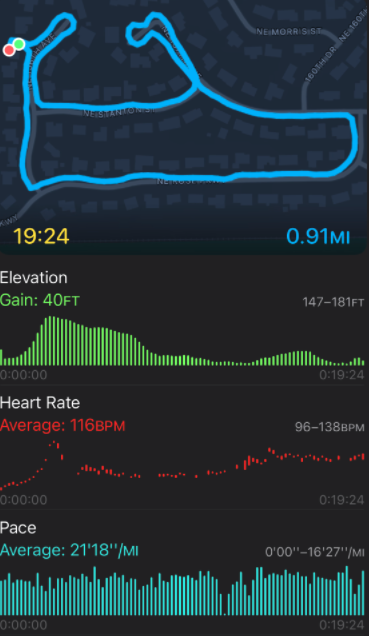
Within a few weeks, I took Tina’s advice and started including the cul-de-sacs in the walk. By now, my pace had improved to 21:18/mile and I was letting Apple choose my effort: Moderate. Despite the faster pace, I was above 120 bpm for only 6 minutes.
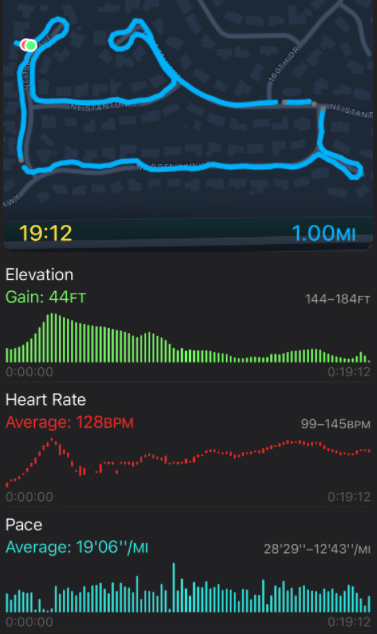
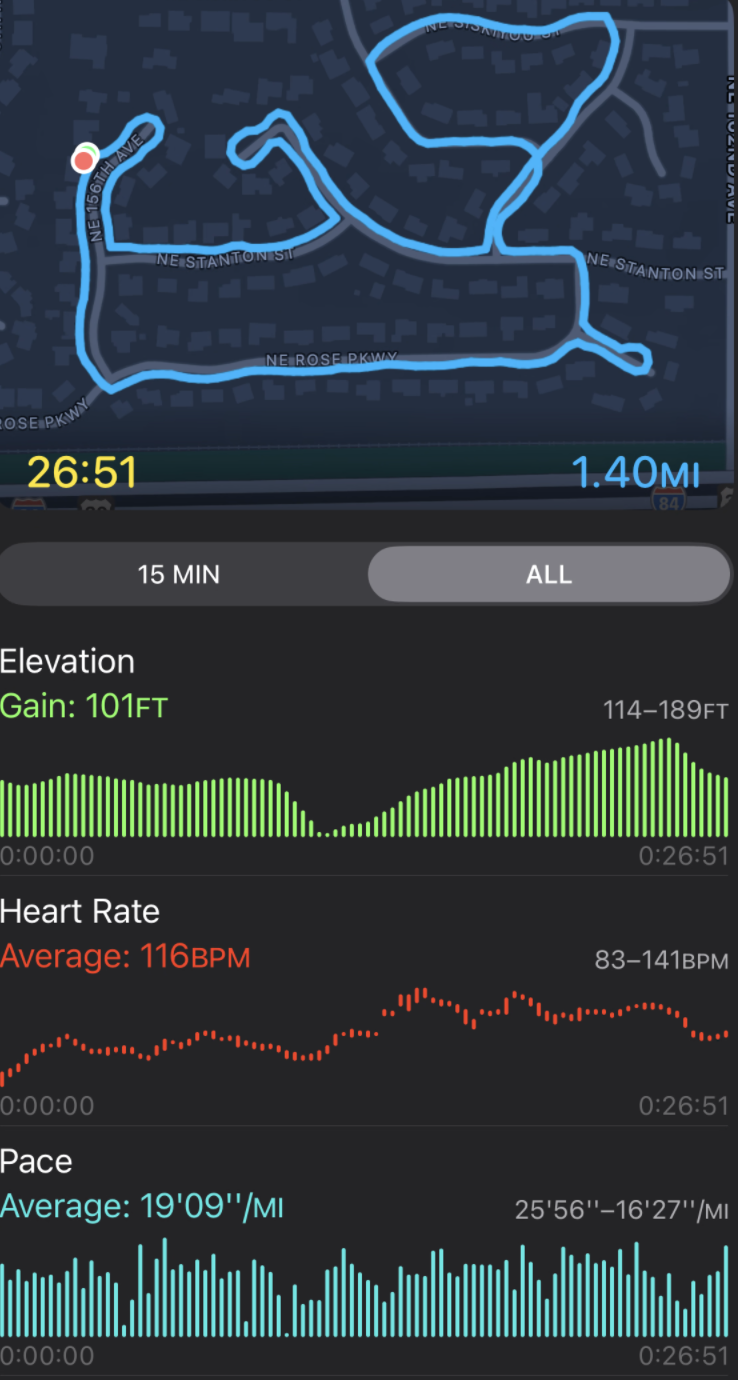
By May my route had evolved to exactly one mile and included both cul-de-sacs. There is a steep hill right at the beginning of the walk, which is clearly visible in both the elevation and heart rate graphs. At this point, I was purposefully driving up my heart rate by walking faster when I could see it drop on my watch. For this walk, I was above 120 bpm for 13 minutes and achieved a pace of 19:06/mile.
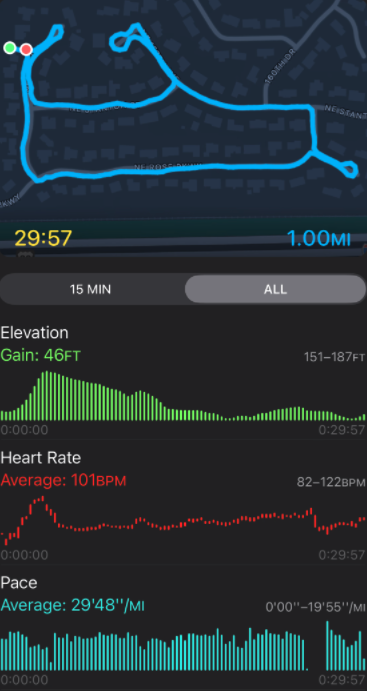
A week after surgery, I was back on my regular route although much slower, with a pace of 29:48. My heart rate was below 120 for nearly all of the walk. During this time I was not meeting my weekly goal of 2 hours above 120 bpm. It would take another week before I was able to walk at a pace of 21:00/mile, sometimes better. I would meet that goal again.
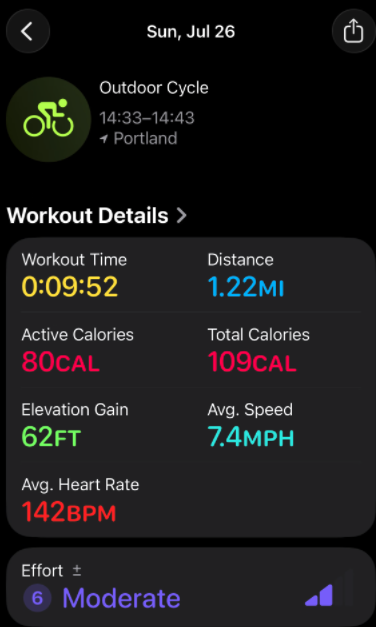
Near the end of July, I pulled my bike out of the garage, pumped up the tires and started riding laps around the block. My first ride was only 2 laps. I continued to walk in the morning every day.
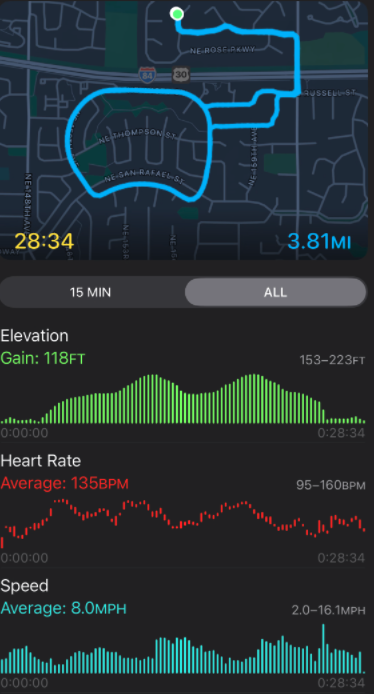
I was not content to ride circles around the block, so in August I returned to my old training “track” at Summerplace, a retirement community on the other side of the freeway. It’s a particularly good route for interval training because half is uphill and the other half is downhill. It looks like I went around twice here before going home. Cycling is great for pushing my heart rate, and for this ride I was above 120 bpm for all but 4:27 of the 28–minute ride.
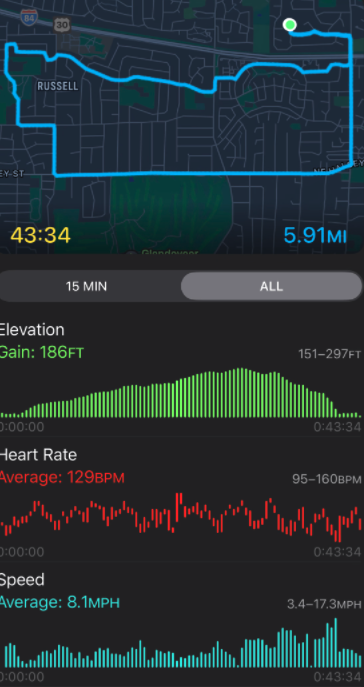
I was ready to leave the confines of Summerplace on August 19, when I rode to John Luby Park. This is the route that I used to ride on my work commute before COVID. There was more uphill than I had remembered which meant that I exceeded 120 bpm for 30 of the 43 minutes.
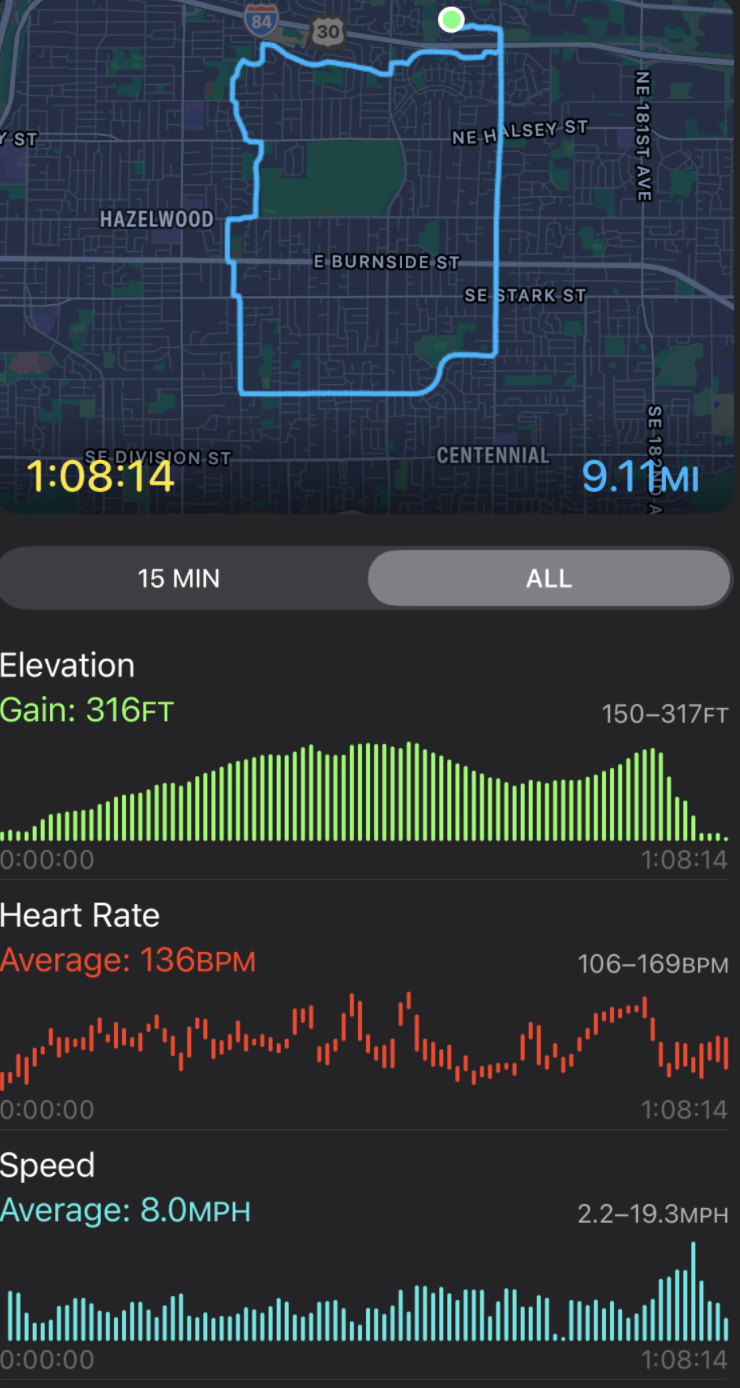
As August drew to a close, I rode for over an hour on a loop through “The 130s” and Mill Ave: 9.11 miles distance, “Hard” effort and an average heart rate of 136 bpm. Soon I hope to be taking 20– and 40–mile rides regularly.
Tina inspired me to change up my walking route again, so now I’m walking 1.4 miles every morning. Two thirds of the route is uphill, so there’s a real opportunity to push my heart rate again.
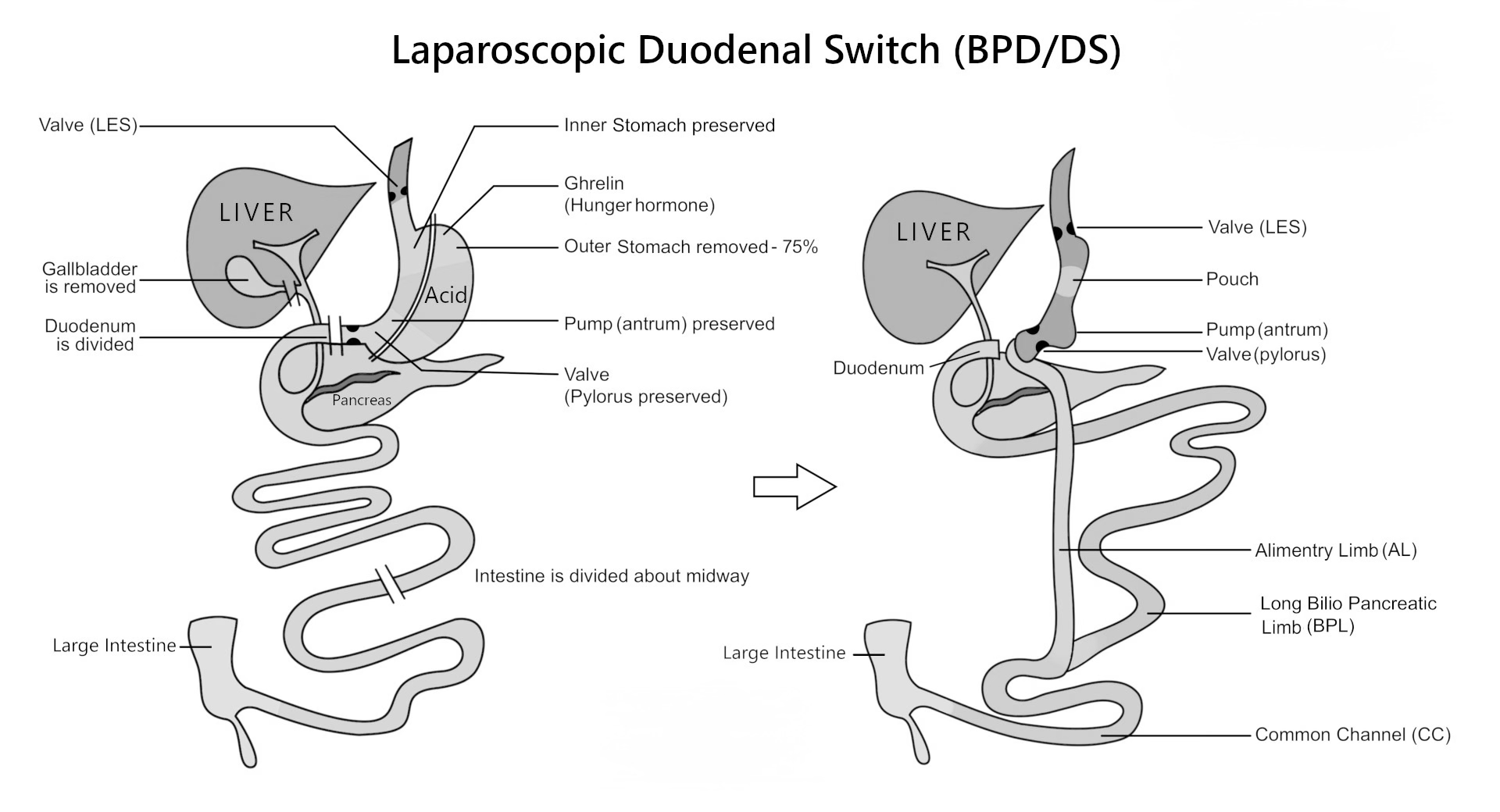
In the simplest terms, this surgery makes the stomach smaller and reduces the amount of food and calories the body can absorb.
This before-and-after diagram above is a little technical but the procedure essentially does this:
About 70-80% of the stomach is removed, leaving a smaller stomach (labeled “pouch” in the diagram)
The duodenum, the passage between the stomach and small intestine,is divided just beyond the stomach.
A cut is made about halfway down the small intestine, essentially dividing it into two parts. We’ll call the top part Intestine 1 and bottom part Intestine 2.
The upper end of Intestine 2 is connected to the portion of the duodenum that is still attached to the pouch.
Intestine 1 remains connected to the liver and pancreas, allowing bile and pancreatic enzymes to continue flowing through it.
The bottom end of Intestine 1 is connected at the bottom of Intestine 2 near where it meets the large intestine.
The consequences of the surgery are:
The stomach is much smaller and can hold far less food than it could before surgery.
Food travels through a shorter digestive pathway (Intestine 2), so fewer calories and nutrients are absorbed.
Digestive enzymes from the liver and pancreas still mix with the food, but this happens much later in the digestive process, shortly before the contents enter the large intestine.